

There’s something so delightfully tropical and creamy about this Passion Fruit Panna Cotta Recipe that makes it well worth your time. The vibrant passion fruit flavor balanced with silky coconut cream creates a dessert that’s both refreshing and indulgent—perfect for any occasion you’ll want to impress but keep simple.

Why You’ll Love This Recipe
- No Gelatin Needed: This recipe uses agar-agar, making it perfect for vegetarians or those avoiding gelatin.
- Vibrant, Natural Flavor: Fresh passion fruit really shines, giving it a tangy, tropical kick you won’t find in store-bought versions.
- Creamy Yet Light Texture: Coconut cream blends smoothly for richness without feeling heavy.
- Easy to Customize: With simple swaps like dairy-free milks, you can tailor this panna cotta to many diets.
Ingredients You’ll Need
The ingredients all work together beautifully to give you that classic panna cotta silkiness with a tart, tropical twist. I recommend using fresh passion fruit—your taste buds will thank you for it.

- Passion Fruit Pulp (seedless): Fresh passion fruit is best for juice extraction; make sure to strain out seeds well for smooth panna cotta.
- Almond Milk (or soy/oat milk): Adds subtle nuttiness and keeps this recipe dairy-free without sacrificing creaminess.
- Granulated Sugar: Balances the tartness of passion fruit perfectly; you can adjust for sweetness preference.
- Agar-Agar Powder: Natural gelling agent that firms this dessert without gelatin—just be sure to use powder, not flakes.
- Coconut Cream (chilled): Gives luscious richness; chilling the can overnight helps you scoop the thick cream easily.
- Vanilla Extract (optional): Adds a warm hint that complements the tropical flavors beautifully.
- Passion Fruit Pulp (with seeds): Used for the coulis— the seeds add a fun crunch and visual texture.
- Lime Juice (freshly squeezed): Brightens the passion fruit coulis, balancing sweetness with a zesty kick.
Variations
One of my favorite things about this Passion Fruit Panna Cotta Recipe is how easy it is to tweak. Whether you want a bit less sweetness or prefer to experiment with different dairy-free milks, it’s super flexible.
- Dairy-Free Swaps: I often use oat milk instead of almond milk when I’m looking for a creamier mouthfeel; it works beautifully and adds a subtle sweetness.
- Extra Citrus Kick: Adding a touch of orange zest to the panna cotta base gives it a fragrant citrus boost that’s irresistible.
- Sweetener Alternatives: Swap granulated sugar for honey or maple syrup for a more complex sweetness, just reduce the heat to avoid burning.
- Fruit Variations: I’ve played with mango or guava pulp instead of passion fruit—each gives a unique tropical flair, though passion fruit remains my top pick!
How to Make Passion Fruit Panna Cotta Recipe

Step 1: Extract and Strain the Passion Fruit Juice
Start by scooping the pulp from about 8-10 passion fruits into a food processor and pulse for about 30 seconds until the juice separates from the seeds. Then, push this mixture through a fine-mesh sieve to catch all those tiny seeds. Trust me, straining is key for a silky texture—there’s nothing worse than biting into gelatin with seeds.
Step 2: Cook the Panna Cotta Base
In a small saucepan, combine the passion fruit juice, almond milk, sugar, and agar-agar powder. Whisk everything really well to prevent clumps. Bring this to a gentle simmer over medium heat, stirring often, and let it cook for about 5 minutes. This allows the agar-agar to dissolve properly and activate its gelling properties.
Step 3: Incorporate Coconut Cream and Vanilla
Remove the pan from the heat, then add in your chilled coconut cream and optional vanilla extract. Return to the stovetop and heat gently on medium-low, stirring until the coconut cream melts and blends smoothly—but don’t let it boil! Boiling can break the texture, so keep it gentle here.
Step 4: Strain and Mold
For the smoothest panna cotta, pass this mixture again through a fine sieve into a heatproof bowl or jug. Then, pour evenly into your chosen molds—this recipe fills about five small panna cotta molds or similar-sized containers. Let the mixture cool slightly at room temperature for about 10 minutes before covering and refrigerating.
Step 5: Chill and Set
Place the molds in the fridge for at least 4 hours or overnight if you can plan ahead. The agar-agar sets firmly, giving you a panna cotta that jiggles just right but holds its shape nicely when unmolded.
Step 6: Make the Passion Fruit Coulis (Optional, But Worth It!)
For that extra zing, simmer passion fruit pulp with seeds and freshly squeezed lime juice for about 5 minutes, whisking often. This coulis adds a bright tang and crunchy texture that pairs perfectly. Cool to room temperature before serving.
Step 7: Serve and Enjoy
To unmold, place a serving plate on top of the mold and flip gently. Silicone molds pop out with just a bit of a nudge, but if you’re using glass or ceramic bowls, carefully run a knife around the edges first. Pour the passion fruit coulis over just before serving for a stunning presentation and extra flavor.
Pro Tips for Making Passion Fruit Panna Cotta Recipe
- Perfect Seed Removal: Using a fine-mesh sieve twice—once after blending and once before molding—gives a luxuriously smooth panna cotta without gritty bits.
- Agar Activation: Simmer the agar-agar mixture for at least five minutes to fully dissolve it—otherwise, your panna cotta might not set properly.
- Coconut Cream Consistency: Chill your canned coconut milk overnight and scoop only the solid cream on top—it adds richness without watery dilution.
- Avoid Boiling After Adding Cream: Gentle heat after mixing in the cream keeps the texture silky—boiling can cause separation or graininess.
How to Serve Passion Fruit Panna Cotta Recipe

Garnishes
I love topping this panna cotta with fresh passion fruit seeds—they add a nice crunch and look gorgeous over the creamy custard. A sprinkle of toasted coconut flakes or thin lime zest curls also give it an extra tropical flair and a little texture contrast.
Side Dishes
This dessert pairs beautifully with summery fruit salads or simple buttery shortbread cookies on the side. For a light ending to a big meal, try serving it alongside a refreshing mint-infused iced tea or sparkling lime water to complement the citrusy passion fruit.
Creative Ways to Present
For a dinner party, I like to serve individual panna cottas in clear glass jars with the coulis layered on top for a parfait effect. You can also use edible flowers or delicate mint sprigs as a finishing touch that impresses without extra fuss.
Make Ahead and Storage
Storing Leftovers
I keep leftover panna cottas covered with plastic wrap or lids in the refrigerator—it’s best eaten within 2-3 days for the freshest flavor and firmest texture. The flavors only get better as they meld, but after a few days the texture can start softening slightly.
Freezing
While panna cotta can be frozen, I’ve found that the texture changes a bit after thawing, becoming less creamy and sometimes a little grainy. If you want to freeze, do so in airtight containers and thaw overnight in the fridge—but I generally prefer making just enough to avoid leftovers.
Reheating
This panna cotta is best served chilled directly from the fridge. If you need to warm it slightly, do so gently at room temperature but avoid microwaving or heat—to preserve that silky texture, it’s meant to be enjoyed cool and refreshing.
FAQs
-
Can I use store-bought passion fruit juice instead of fresh pulp?
Fresh pulp is ideal for the brightest flavor and texture, but if you opt for store-bought passion fruit juice, make sure it’s 100% juice with no added sugar or preservatives. You might need to adjust sugar levels since bottled juice can be sweeter or more diluted.
-
Why do I need to use agar-agar powder, not flakes?
Agar-agar powder dissolves more evenly and gels more reliably in recipes like this panna cotta. Agar flakes can require longer soaking and sometimes yield less consistent results, so powder makes your life easier.
- Can I sweeten this panna cotta with alternatives like honey or maple syrup?
Yes! You can substitute granulated sugar with natural sweeteners, but be mindful that the texture and setting might change slightly. When heating, do so gently to avoid caramelizing or burning your sweetener.
- How can I tell when the panna cotta is properly set?
After chilling for at least 4 hours, the panna cotta should feel firm but still wobbly to the touch. If it’s too soft, it may need more agar or additional chilling time before unmolding.
Final Thoughts
I absolutely love how this Passion Fruit Panna Cotta Recipe comes together—bright, creamy, and just the right amount of sweetness with that tropical zing. It’s one of those desserts that always gets compliments but is surprisingly simple to pull off. Honestly, it’s become my go-to when I need a dessert that feels fancy but doesn’t require hours in the kitchen. I can’t recommend giving it a try enough—you’ll enjoy the process almost as much as the delicious results!
Print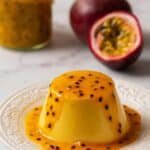
Passion Fruit Panna Cotta Recipe
- Prep Time: 20 minutes
- Cook Time: 10 minutes
- Total Time: 4 hours 20 minutes
- Yield: 5 servings 1x
- Category: Dessert
- Method: Stovetop
- Cuisine: Fusion
- Diet: Vegan
Description
A refreshing and creamy Passion Fruit Panna Cotta made without gelatin using agar-agar powder, infused with tropical passion fruit flavor and creamy coconut milk. Served with an optional tangy passion fruit coulis, this dessert is perfect for a light and fruity finish to any meal.
Ingredients
Panna Cotta:
- 160 g (⅔ cup) passion fruit pulp (without seeds) extracted from ~8-10 passion fruits
- 240 ml (1 cup) almond milk or soy milk/oat milk
- 100 g (½ cup) granulated sugar
- ¾ teaspoon agar-agar powder
- 240 g (1 cup) coconut cream or chilled full-fat canned coconut milk
- 1 teaspoon vanilla extract (optional)
Passion Fruit Coulis (optional):
- 200 g (¾ cup + 2 tablespoons) passion fruit pulp (with seeds)
- 1 tablespoon lime juice freshly squeezed
Instructions
- Separate passionfruit juice and seeds: Add the passion fruit pulp to a food processor and blitz for around 30 seconds until the juices separate from the seeds.
- Sift: Press the mixture through a fine-mesh sieve to remove the passion fruit seeds, collecting the juice.
- Cook: In a small saucepan, combine the passionfruit juice, almond milk, sugar, and agar-agar powder. Whisk well and simmer over medium heat for 5 minutes, allowing the agar-agar to dissolve.
- Add flavors and cream: Remove the saucepan from heat and whisk in the coconut cream and vanilla extract. Return to medium-low heat and gently warm until the coconut cream melts into the mixture, but do not boil.
- Sift again: Pour the mixture through a fine-mesh sieve into a heat-proof bowl or large jug to ensure smoothness.
- Mold: Divide the mixture evenly between serving containers or molds suitable for panna cotta.
- Set: Allow the molds to cool slightly for 10 minutes, cover with lids or plastic wrap, and refrigerate for 4 hours or overnight until fully set.
- Prepare coulis: For the optional passion fruit coulis, add the passion fruit pulp with seeds, sugar, and lime juice to a saucepan. Bring to a simmer and cook for 5 minutes while whisking regularly. Remove from heat and let cool to room temperature.
- Unmold: Remove the lids or wrap, place a serving plate over the mold, invert, and gently push the sides of silicone molds to release the panna cotta. For ceramic or glass bowls, run a knife around the edges before serving.
- Serve: Pour the cooled passion fruit coulis over the panna cotta just before serving for a vibrant and tangy finish.
Notes
- For passion fruit pulp, use 10 medium-large passion fruits; more may be needed depending on size and juiciness.
- Use agar-agar powder, not agar flakes, for proper setting.
- Chill canned coconut milk overnight and use the thick coconut cream from the top for the best creamy texture.
- If preferred, substitute almond milk with soy milk or oat milk for a different plant-based option.
- Vanilla extract is optional but adds a subtle sweetness that complements the passion fruit.
- Ensure not to boil the mixture after adding coconut cream to avoid separation.
- The coulis can be prepared a day ahead and refrigerated.


