There’s something irresistibly vibrant and comforting about this dish — the perfect blend of spicy, sweet, and savory flavors that dance on your palate. This Gochujang Noodles Recipe has quickly become one of my go-to quick meals because it’s satisfying, easy to make, and packs a punch in every bite.

Why You’ll Love This Recipe
- Flavor-Packed Sauce: The gochujang-based sauce blends sweet, spicy, and umami in a harmonious way that keeps you coming back for more.
- Quick and Easy: Ready in about 30 minutes, this recipe works wonderfully for busy weeknights or when you want a fuss-free dinner.
- Versatile Ingredients: You can swap vegetables and noodles to suit your pantry or dietary needs without losing the essence of the dish.
- Delicious Leftovers: The noodles hold up well in the fridge and reheat beautifully, making meal prep a breeze.
Ingredients You’ll Need
Every ingredient in this Gochujang Noodles Recipe has a role — from the spicy fermented gochujang paste to the tender noodles and crisp vegetables. I love that everything comes together simply, with accessible ingredients you can find at most markets.

- Fresh Udon Noodles: These thick, chewy noodles soak up the sauce beautifully and give the dish a satisfying bite.
- Gochujang: The heart of the sauce, this Korean chili paste gives it that signature spicy-sweet kick.
- Toasted Sesame Oil: Adds a nutty aroma and depth that elevates the entire dish.
- Soy Sauce: Brings salty umami balance; try tamari for a gluten-free option.
- Mirin or Rice Vinegar: Adds brightness and a touch of sweetness, balancing the heat.
- Organic Brown Sugar: Enhances the sweetness, rounding out the flavor layers.
- Gochugaru (optional): Korean chili flakes that deepen the heat if you’re a spice lover like me.
- Neutral-flavored Oil: For sautéing aromatics without overpowering the flavors.
- Scallions: Both whites for cooking and dark green tops for garnish add freshness.
- Garlic and Ginger: Fresh aromatics that provide warmth and zing.
- Napa Cabbage or Bell Peppers: I recommend Napa cabbage for its softness, but bell peppers add a nice crunch and color.
- Roasted White Sesame Seeds: Adds texture and a toasty note.
- Thai Basil or Fresh Cilantro: For that final fresh, herbal pop.
Variations
I love how flexible this Gochujang Noodles Recipe is — you can easily switch up veggies, noodles, or spice levels to suit what you have on hand or your mood.
- Veggie Swap: Once, I replaced Napa cabbage with sautéed mushrooms and bok choy, and the earthiness gave the dish a lovely twist.
- Protein Add-in: Adding tofu, shrimp, or thinly sliced beef amps up the meal for a heartier version.
- Noodle Alternatives: I’ve tried it with soba and rice noodles; both work well but adjust cooking times accordingly.
- Spice Level: Skip or add gochugaru based on your heat tolerance — I like mine spicy but manageable!
How to Make Gochujang Noodles Recipe

Step 1: Cook Your Noodles Just Right
Start by boiling your fresh udon noodles — timing here is everything. I’ve learned that cooking them just a minute less than package instructions keeps them from getting mushy once tossed in sauce. Use a chopstick to gently separate them halfway through cooking for even texture. Don’t forget to save a bit of the noodle water before draining — more on why soon!
Step 2: Whisk Your Flavorful Gochujang Sauce
While the noodles cook, mix the sauce ingredients: gochujang, toasted sesame oil, soy sauce, mirin, brown sugar, and optional gochugaru. I always whisk until smooth so the sugar dissolves completely and the sauce is ready to cling to every strand of noodle.
Step 3: Sauté Aromatics and Vegetables
Heat neutral oil in a large pan and toss in scallion whites, garlic, and ginger — these bring depth and aroma before adding your veggies. If you’re using bell peppers, add them now; for Napa cabbage, add a pinch of salt and stir-fry until it softens just a bit but still has a slight crunch. This balance keeps the noodles from turning soggy later.
Step 4: Combine Sauce, Noodles, and Seeds
Add the gochujang sauce and roasted sesame seeds to the pan and let everything sizzle together for a minute — this intensifies the flavors. Then fold in the noodles, coating them well with the sauce. If it seems too dry, stir in a spoonful or two of reserved noodle water; this trick keeps the sauce silky without watering down the taste.
Step 5: Finish with Fresh Herbs and Sesame Oil
Once off the heat, toss in a handful of Thai basil leaves or fresh cilantro and a final drizzle of toasted sesame oil for that irresistible fragrance. This last step adds freshness and a lovely contrast to the warmth of the sauce.
Pro Tips for Making Gochujang Noodles Recipe
- Reserve Noodle Water: I can’t stress this enough — just a little starchy water helps loosen up the sauce perfectly, especially if you’re using dried noodles.
- Don’t Overcook Vegetables: Keeping your cabbage or bell peppers slightly crisp prevents the dish from becoming soggy, maintaining great texture.
- Adjust Heat Gradually: Add gochugaru slowly if you’re unsure about spice levels — you can always add more later.
- Mix Sauce Thoroughly: When stirring the sauce, whisk it well first and then coat the noodles quickly to avoid clumps of paste.
How to Serve Gochujang Noodles Recipe

Garnishes
I love piling on the dark green scallion tops and toasted sesame seeds as a garnish for texture and color contrast. Fresh Thai basil leaves add a wonderful herbal brightness, but if you don’t have basil, cilantro is a fantastic stand-in.
Side Dishes
Pair these noodles with simple sides like kimchi or a crisp cucumber salad to cut through the richness and add a refreshing crunch. Sometimes I serve a soft-boiled egg on the side for a little extra indulgence.
Creative Ways to Present
For dinner parties, I like to serve this Gochujang Noodles Recipe in individual bowls garnished with microgreens or edible flowers for a fresh twist. Adding crushed peanuts or fried shallots on top also impresses guests and adds an unexpected crunch.
Make Ahead and Storage
Storing Leftovers
I keep leftovers in an airtight container in the fridge for up to 3 days. The noodles tend to absorb the sauce over time, so before reheating, I stir in a little water or broth to loosen the texture.
Freezing
While this recipe freezes okay, I prefer to avoid freezing it as the texture of the noodles can get a bit mushy after thawing. If you do freeze, place in a tightly sealed container and use within a month for best quality.
Reheating
Reheat gently in a skillet over medium heat, adding a splash of water or soy sauce to refresh the sauce. You can also microwave it covered, stirring halfway through to distribute heat evenly.
FAQs
-
Can I use different noodles for the Gochujang Noodles Recipe?
Absolutely! While fresh udon noodles are ideal for their chewy texture, you can swap in soba, rice noodles, or even spaghetti. Just adjust the cooking time accordingly, and remember that the sauce may cling differently depending on the noodle type.
-
Is gochujang very spicy for someone new to Korean flavors?
Gochujang has a mild to moderate heat with a subtle sweetness and depth, so it’s generally approachable for beginners. If you’re sensitive to spice, start with less and gradually increase to your taste. The addition of brown sugar and mirin also helps mellow out the heat.
-
Can I make this recipe vegan or vegetarian?
Yes! This Gochujang Noodles Recipe is naturally vegan if you use tamari instead of soy sauce (to ensure gluten-free) and skip any meat add-ins. The sauce ingredients are plant-based, and veggies can be varied to your preference.
-
What’s the best way to adjust the spice level?
Adjust the gochujang amount and the optional gochugaru in the sauce to your liking. Start small and taste as you go. You can also add a touch of honey or more brown sugar to tone down the heat if needed.
Final Thoughts
Honestly, this Gochujang Noodles Recipe has won a permanent spot in my repertoire because it’s so adaptable and delightful every time I make it. Whether you want a speedy dinner or a crowd-pleaser at your next gathering, you’ll enjoy how simple yet flavorful it is. Give it a try — I promise it’ll become a favorite in your kitchen too!
Print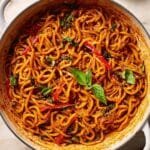
Gochujang Noodles Recipe
- Prep Time: 20 minutes
- Cook Time: 10 minutes
- Total Time: 30 minutes
- Yield: 3 servings 1x
- Category: Main Course
- Method: Frying
- Cuisine: Korean
- Diet: Vegetarian
Description
A flavorful and spicy Korean-inspired dish featuring fresh udon noodles coated in a tangy gochujang sauce, stir-fried with aromatic garlic, ginger, scallions, and crisp Napa cabbage or bell peppers, finished with toasted sesame seeds and fresh Thai basil.
Ingredients
Noodles
- 16 ounces fresh udon noodles
Gochujang Sauce
- 3 tablespoons gochujang
- 1 tablespoon toasted sesame oil
- 2 tablespoons soy sauce (use tamari for gluten free)
- 2 tablespoons mirin or rice vinegar
- 1 ½ tablespoons organic brown sugar
- 1 tablespoon gochugaru (optional)
Aromatics and Vegetables
- 1 heaping tablespoon neutral-flavored oil
- 1 bunch (about 6) scallions, whites and light greens chopped into 1-inch pieces, dark green tops sliced thinly on a bias (reserve for garnish)
- 4 garlic cloves, finely chopped
- 1-inch piece ginger, grated or minced
- 6 to 8 cups thinly sliced Napa cabbage (250g) OR 2 medium bell peppers, thinly sliced
- ¼ cup (32g) roasted white sesame seeds
Finishing
- A few handfuls Thai basil leaves or fresh cilantro, chopped
- A drizzle of toasted sesame oil
Instructions
- Cook the noodles: Cook the noodles according to the package instructions, but for fresh udon noodles, boil for 1 minute, loosen with chopsticks, then cook for an additional 30 seconds to avoid sogginess.
- Drain and reserve water: Scoop out a small amount of noodle cooking water and then drain the noodles completely.
- Prepare the sauce: Whisk together gochujang, toasted sesame oil, soy sauce, mirin or rice vinegar, organic brown sugar, and gochugaru if using; set aside.
- Cook aromatics and vegetables: Heat neutral oil in a large frying pan over medium-high heat until shimmering. Add scallion whites and light greens, garlic, ginger, and bell peppers if using; season with salt and cook 1 to 2 minutes. If using Napa cabbage, add now with a pinch of salt and stir-fry for 3 minutes until tender but still crisp.
- Add sauce and noodles: Stir in gochujang sauce and roasted white sesame seeds to sizzle. Add cooked noodles and toss with tongs to coat evenly. If the mixture feels dry, add a spoon or two of reserved noodle water. Cook for 1 to 2 minutes until sauce clings to noodles.
- Finish and serve: Remove from heat, stir in Thai basil or cilantro, and drizzle with toasted sesame oil. Garnish with reserved scallion greens before serving.
Notes
- For dry noodles, cook according to package and use reserved noodle water to loosen the sauce as needed.
- Gochujang can be substituted with a mix of chili paste and miso if unavailable.
- Use tamari instead of soy sauce for a gluten-free version.
- Napa cabbage provides a classic texture; bell peppers add sweetness and crunch as an alternative.
- Toast the sesame seeds yourself if possible for enhanced flavor.
- Adjust spice level by omitting gochugaru or adding more for heat.