

There’s something incredibly refreshing about a salad that bursts with vibrant colors and bold flavors. The Greek Salad with Feta and Olives Recipe is one of those classics that instantly transports you to sun-soaked Mediterranean afternoons, with every bite singing of fresh veggies, briny olives, and creamy feta. It’s simple, yet so satisfying, and once you get it right, you’ll want to make it again and again.

Why You’ll Love This Recipe
- Freshness in Every Bite: The crisp veggies paired with tangy feta and olives create an unbeatable freshness that’s perfect for warm days.
- Effortless to Prepare: You’ll be amazed how quickly this comes together with just chopping and tossing—ideal for busy weeknights or spontaneous guests.
- Authentic Mediterranean Flavor: Using real Greek ingredients like Kalamata olives and quality feta gives you an authentic taste experience.
- Versatile and Customizable: It’s easy to tweak with your favorite add-ons, making it a go-to salad you’ll keep coming back to.

Ingredients You’ll Need
The beauty of this Greek Salad with Feta and Olives Recipe is in the simplicity of its ingredients. Each one brings its own character, and together they create a harmonious balance. Fresh produce and quality staples are key, so don’t be shy about visiting your local farmers market or Mediterranean store.

- Red onion: I like to slice mine thin and soak briefly in ice water to calm the sharpness, making it more approachable and crunchy.
- Tomatoes: Look for juicy, ripe tomatoes. I prefer vine-ripened or heirloom varieties for extra sweetness and color.
- English cucumber: Partially peeled to make those pretty stripes—adds texture and freshness without too much water.
- Green bell pepper: Crisp and slightly sweet; I remove the seeds and slice into rings to keep things vibrant and easy to eat.
- Kalamata olives: These pitted beauties bring that classic briny punch that’s essential to the Greek salad vibe.
- Dried oregano: A sprinkle of this herb lends that unmistakable Mediterranean aroma and taste.
- Kosher salt: Just a pinch to enhance all the flavors without overpowering.
- Extra virgin olive oil: Use a good-quality one—it makes a big difference in flavor and richness.
- Red wine vinegar: Adds the right amount of tang; I sometimes adjust quantity based on my mood.
- Greek feta cheese in brine: The star of the salad with its creamy texture and salty bite; I tear it into slabs rather than crumbling for better presentation and taste.
Variations
I love how this Greek Salad with Feta and Olives Recipe offers so much room for personalization. Whether you want it lighter, heartier, or with a bit of a twist, it adapts beautifully to your taste and what’s in season.
- Additions like capers or fresh herbs: I’ve found that tossing in fresh parsley or mint adds a refreshing twist, especially in summer.
- Substitute the green bell pepper: When green bell peppers aren’t my favorite, I sometimes use mild sweet peppers or even thinly sliced radishes for crunch.
- Turn it into a main course: Adding grilled chicken, shrimp, or chickpeas makes this salad more filling and still keeps the flavors authentic.
- Dressing swaps: For a punchier flavor, try replacing red wine vinegar with fresh lemon juice or mix in some garlic for a classic Ladolemono dressing.
How to Make Greek Salad with Feta and Olives Recipe
Step 1: Soften the Onion with a Quick Soak
I used to skip this step and found the onion’s bite could overpower the other flavors. To mellow it, I slice the red onion thin into half-moon shapes and soak them in a bowl of ice water with a teaspoon of red wine vinegar for about 10 minutes. This little trick takes the edge off and adds a subtle crunch, making the salad more balanced.
Step 2: Combine the Fresh Veggies and Olives
Once your onion is ready, toss it together with the tomatoes, striped cucumber half-moons, green pepper rings, and Kalamata olives in a large serving bowl. Freshness here is everything, so make sure each veggie is crisp and ripe. I like arranging them just so because it makes the colors pop, but feel free to keep it rustic and simple.
Step 3: Season and Dress Gently
Sprinkle 3/4 teaspoon dried oregano and a pinch of kosher salt over the salad. Drizzle the extra virgin olive oil and red wine vinegar to your taste—start small, toss gently, taste, and adjust. You don’t want to bruise the veggies, so go easy with tossing to combine evenly without crushing anything.
Step 4: Top with Feta and Finish with Oregano
The crowning glory is the slab of Greek feta on top—torn by hand for better texture and presentation. Finally, a light sprinkle of remaining oregano on top completes that authentic look and boosts flavor. Serve immediately to enjoy the freshest, crunchiest experience.
Pro Tips for Making Greek Salad with Feta and Olives Recipe
- Balancing the Onion’s Bite: Soaking the onion in ice water with vinegar is a game-changer to make the flavor gentle – trust me, it’s worth the extra 10 minutes.
- Choose Quality Olive Oil: A robust, peppery extra virgin olive oil lifts the salad from good to unforgettable.
- Serve Fresh: Greek salad tastes best right after assembling before the veggies release too much juice and get soggy.
- Don’t Overdress: Start with a little vinegar and oil—you can always add more, but you can’t take it out once it’s soaked in.
How to Serve Greek Salad with Feta and Olives Recipe
Garnishes
I usually garnish with a sprinkle of fresh oregano or parsley for a pop of green. A little cracked black pepper right before serving also adds a subtle kick I love. Sometimes, a light drizzle of olive oil just before plating takes it up a notch visually and flavor-wise.
Side Dishes
This Greek Salad pairs beautifully with grilled lamb or chicken, warm pita bread, or simple lemon rice. When I’m feeling casual, a loaf of crusty bread to soak up the dressing is all we need for a satisfying meal.
Creative Ways to Present
For special occasions, I like serving this salad in individual glass bowls or mason jars layered for a stunning visual effect. Arranging the veggies by color or building a salad “stack” on plates with feta slabs leaning artistically adds a beautiful touch that guests always notice.
Make Ahead and Storage
Storing Leftovers
My experience is that leftover Greek Salad with Feta and Olives Recipe is best eaten within 1-2 days. I keep it covered in the fridge and hold off on adding the feta until serving if I can, to keep it from drying out. If already combined, it’s still delicious — just expect the veggies to soften a bit.
Freezing
Because of the fresh veggies and feta, I don’t recommend freezing this salad. The texture of cucumbers and tomatoes doesn’t hold up well, and the feta can become crumbly and lose its creaminess after thawing.
Reheating
Greek Salad is meant to be enjoyed fresh, so reheating isn’t something I do. If you want warm components on the side, try warming grilled meats or bread alongside your cold, crisp salad for contrast.
FAQs
-
Can I use regular feta cheese instead of Greek feta?
Regular feta can work, but Greek feta in brine tends to be creamier and less crumbly, which really enhances the texture and moisture in this salad. If you have only regular feta, just try to get a good-quality block and tear it into chunks rather than crumbling.
-
Is it necessary to soak the onions?
It’s not required, but soaking sliced onions in ice water with a splash of vinegar mellows their sharpness and makes them more pleasant to eat, especially if you find raw onions too strong.
-
Can I prepare Greek salad ahead of time?
You can chop the veggies in advance, but I recommend dressing the salad and adding the feta slabs just before serving to keep everything fresh and crisp.
-
What’s the best way to serve this salad?
Serve it chilled or at room temperature as a refreshing side, or add grilled protein for a light, healthy main dish. Pairing with crusty bread to soak up the dressing is always a hit!
Final Thoughts
I absolutely love how this Greek Salad with Feta and Olives Recipe captures the essence of Mediterranean cooking—so simple, so bold, and so satisfying. When I first tried making this salad properly, it became an instant crowd-pleaser in my house, and I bet you’ll feel the same. It’s a timeless classic that brightens up any meal and makes eating veggies something to look forward to. Give it a go and I’m sure it’ll become a staple in your kitchen, too!
Print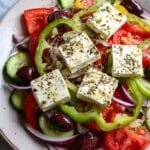
Greek Salad with Feta and Olives Recipe
- Prep Time: 15 minutes
- Cook Time: 0 minutes
- Total Time: 15 minutes
- Yield: 6 servings 1x
- Category: Salad
- Method: No-Cook
- Cuisine: Greek
- Diet: Vegetarian
Description
A refreshing and traditional Greek Salad, also known as Horiatiki, featuring ripe tomatoes, crisp cucumbers, green bell pepper, Kalamata olives, and tangy feta cheese, dressed with extra virgin olive oil, red wine vinegar, oregano, and kosher salt for a classic Mediterranean taste.
Ingredients
Vegetables
- 1 medium red onion, thinly sliced into half moons
- 4 medium juicy tomatoes, sliced into bite-sized pieces or wedges
- 1 English cucumber, partially peeled to make a striped pattern and sliced into half moons
- 1 green bell pepper, cored and sliced into rings
- 1 handful pitted Kalamata olives
Seasoning and Dressing
- 1 1/2 teaspoons dried oregano
- Kosher salt, to taste
- 1/4 cup extra virgin olive oil
- 1–2 tablespoons red wine vinegar
Cheese
- 1 (7 ounce) block Greek feta cheese in brine, torn into slabs
Instructions
- Shock the onion: If you prefer to mellow the raw taste of the onion, fill a small bowl with ice water, add about 1 teaspoon of red wine vinegar to it, then soak the sliced onion in the water for 10 minutes. Drain before adding to the salad.
- Combine the veggies: In a large serving dish, place the tomatoes, cucumber, green bell pepper, and Kalamata olives. Add the drained onion slices to the dish.
- Season the salad: Sprinkle the vegetables with 3/4 teaspoon of dried oregano and a pinch of kosher salt. Pour the extra virgin olive oil and 1-2 tablespoons of red wine vinegar over the salad, adjusting vinegar to your taste. Gently toss everything together to combine.
- Finish and serve: Top the salad with slabs of Greek feta cheese. Sprinkle the remaining 3/4 teaspoon of oregano over the cheese and salad. Serve immediately and enjoy the fresh, vibrant flavors.
Notes
- For a milder onion flavor, soaking the sliced onions in ice water with a bit of vinegar is recommended but optional.
- Use quality extra virgin olive oil and authentic Greek oregano for the best Mediterranean flavor.
- Leftovers can be covered and refrigerated for up to 2 days; however, the salad is best enjoyed fresh.
- For a punchier taste, try the salad with a lemon and garlic dressing like Ladolemono.
- Partially peeling the cucumber in stripes adds a decorative touch and helps balance the texture.


