

There’s something so comforting about the sweet, tender crumb and rich cheese filling of a traditional Romanian Easter bread. This Romanian Easter Pasca Bread Recipe is special because it combines a soft, fragrant dough with a creamy, vanilla-infused filling that’s simply irresistible. Making it is a lovely way to bring a bit of Romanian heritage to your table, especially during the holiday season—or frankly, any time you want a cozy, impressive treat.

Why You’ll Love This Recipe
- Rich Tradition: It’s a classic Romanian Easter centerpiece that’s full of cultural heart and flavor.
- Creamy Cheese Filling: The luscious ricotta and vanilla filling contrast beautifully with the soft, fluffy dough.
- Textural Delight: A braided crust gives a gorgeous finish and a little crunch to each bite.
- Perfect for Celebrations: It’s visually stunning and perfect for sharing with loved ones, making it a joyous bake.
Ingredients You’ll Need
Each ingredient plays a role in creating the perfect balance of softness, sweetness, and tanginess that defines this Romanian Easter Pasca Bread Recipe. Don’t rush picking fresh dairy and good-quality yeast—they really elevate the final loaf.

- Active dry yeast: Vital for that fluffy, risen dough; make sure it’s fresh and bubbling before you start.
- Warm water: Helps activate the yeast without killing it—warm, not hot, is the trick.
- Milk: Adds richness to the dough; whole milk works best for creaminess.
- Unsalted butter: Melted, it infuses softness and flavor—unsalted lets you control the saltiness.
- Lemon zest: Brightens the dough and the filling with fresh citrus notes; don’t skip it.
- Sugar: Sweetens both dough and filling; you can adjust slightly depending on your taste.
- All-purpose flour: Provides the structure; fresh flour gives the best rise and crumb.
- Eggs: Eggs add richness—separate quantities for dough, filling, and egg wash.
- Vanilla extract: Enhances the delicate sweetness in both dough and filling.
- Ricotta cheese: The star of the filling—smooth and mild for that signature creamy filling.
- Raisins: Adds texture and bursts of sweetness; soak them first to keep them plump and juicy.
Variations
I love how adaptable this Romanian Easter Pasca Bread Recipe is. You can easily make it your own with small tweaks that suit your taste or dietary needs—try out these ideas and see what becomes your new favorite.
- Use cream cheese instead of ricotta: For a tangier, richer filling, cream cheese adds a delightful twist that my family can’t resist.
- Add chopped nuts: Toasted walnuts or almonds folded into the filling introduce a lovely crunch and earthiness.
- Swap raisins for dried cherries or cranberries: I did this once and it gave a delicious tart contrast that freshened the bread wonderfully.
- Gluten-free flour mix: If you need to avoid gluten, a blend suited for yeast breads works well, but expect a slightly denser bread.
How to Make Romanian Easter Pasca Bread Recipe

Step 1: Activate Your Yeast Gently
Start by stirring the yeast into warm water (about 105°F/40°C) with a tablespoon of sugar. Let it sit around 10-15 minutes until it’s bubbly and foamy—this signals it’s alive and ready to work its magic. I learned the hard way that skipping this step can mean your bread won’t rise properly!
Step 2: Warm Your Milk and Melt Butter
Heat milk, melted butter, lemon zest, and sugar over medium-low until just warm and the sugar is dissolved—no boiling! If it’s too hot, it’ll kill the yeast. Whisk in the eggs and vanilla next; this layered warmth ensures your dough will be tender and fragrant.
Step 3: Mix and Knead the Dough to Perfection
In your mixer bowl, combine flour, milk mixture, and yeast mixture. Using a dough hook, mix on medium speed for about 5 minutes. The dough will be soft and a bit sticky—that’s perfect. I keep floured hands nearby while shaping, and remember: kneading well builds the gluten for that incredible chew!
Step 4: First Rise – Let the Dough Double
Lightly oil a large bowl, place your dough inside, and rub some oil on top so it doesn’t dry out. Cover tightly with plastic wrap and set it somewhere warm but draft-free. I like my oven turned off but with the light on for a cozy rise. This usually takes 1-2 hours until the dough doubles in size—don’t rush this part!
Step 5: Shape the Pasca and Prepare the Braided Crust
Preheat your oven to 350°F (180°C) and line a large baking sheet with parchment. Divide the dough into 4 equal parts. Roll one out to a 10-inch circle—this will be the base. Roll the other three into long ropes and braid them, then arrange the braid in a circle around the base. This creates the signature border that holds all the delicious filling in place.
Step 6: Prepare the Luscious Cheese Filling
Mix ricotta, eggs, vanilla, sugar, raisins, and lemon zest until smooth and creamy. Some folks soak the raisins briefly in warm water or rum to keep them tender and flavorful—I’ve found it really keeps them juicy so they don’t dry out while baking. Once mixed, pour the filling right inside the ring of braided dough.
Step 7: Second Rise and Egg Wash
Cover your assembled Pasca and let it rise again until doubled, about 30-45 minutes. Just before baking, brush the dough with beaten egg for that irresistible shiny golden crust. You can even sprinkle a little sugar on top if you want an extra touch of sweetness and crunch.
Step 8: Bake and Cool
Bake for 40 to 45 minutes until the crust is deep golden brown but not burnt. Every oven is different, so keep an eye toward the end. Once out of the oven, let it cool completely before slicing—I learned this helps the filling set nicely so each slice stays perfect and clean.
Pro Tips for Making Romanian Easter Pasca Bread Recipe
- Perfectly Proof Your Yeast: Always proof your yeast first to avoid flat bread—I once wasted a batch skipping this, and learned it’s non-negotiable.
- Don’t Over Knead: Knead until smooth and elastic but stop before the dough gets tough; it should feel soft and slightly sticky.
- Use Fresh Ingredients: Fresh milk, quality ricotta, and good vanilla extract make a world of difference in flavor.
- Cool Completely Before Slicing: This ensures the filling sets properly and your slices come out neat and beautiful every time.
How to Serve Romanian Easter Pasca Bread Recipe

Garnishes
I like topping a slice lightly with a dusting of powdered sugar for a delicate sweetness and sometimes a dollop of homemade sour cream or a spoonful of fruit preserves—strawberry or apricot works beautifully. It adds extra moisture and flavors that complement the creamy filling wonderfully.
Side Dishes
Traditionally served with Easter ham and fresh salads, but honestly, I enjoy it with a hot cup of coffee or a simple fruit compote. It makes for a perfect brunch centerpiece that keeps everyone coming back for seconds.
Creative Ways to Present
For special occasions, I’ve braided a colorful dough border by mixing a little cocoa powder into part of the dough for a marble effect. You can sprinkle edible flowers or crushed pistachios on top after brushing with egg wash for a festive touch that wows your guests every time.
Make Ahead and Storage
Storing Leftovers
I wrap leftover Pasca tightly in plastic wrap and store it at room temperature for up to 2 days. Keep it in an airtight container if you want it to stay moist, but it’s best enjoyed fresh within the first day or so for that perfect texture.
Freezing
I’ve frozen slices wrapped in foil and plastic wrap, and they thaw beautifully without losing flavor or texture. Just pop frozen slices into a sealed container or ziplock bag and freeze for up to 3 months.
Reheating
When reheating, I gently warm slices in a preheated oven at 300°F (150°C) for about 10 minutes covered with foil to prevent drying out, or microwave for 20-30 seconds if in a hurry. It comes out soft and just like freshly baked.
FAQs
-
Can I make the Romanian Easter Pasca Bread Recipe without a stand mixer?
Absolutely! You can knead this dough by hand—just be prepared to knead for about 10-15 minutes until the dough is smooth and elastic. It’s a good arm workout but very rewarding. Just keep your hands lightly floured and be patient for the best texture.
-
Can I substitute ricotta cheese if I can’t find it?
Yes, fresh farmer’s cheese or even well-drained cream cheese can be good alternatives. Ricotta is mild and slightly grainy, so if using cream cheese, the filling will be creamier and denser. Adjust sugar slightly to taste if needed.
-
Why is my Pasca bread dense and not fluffy?
This usually happens if the yeast isn’t active or the dough hasn’t risen enough. Make sure your yeast bubbles when proofing and allow the dough to rise fully twice as instructed. Avoid over-kneading the dough as well, which can make it tough.
-
Can I prepare the dough the night before?
Yes! After the first rise, you can refrigerate the dough overnight. Bring it back to room temperature and let it rise again before shaping and baking. It’s a nice way to spread out the work and deepen the flavor.
Final Thoughts
I absolutely love how this Romanian Easter Pasca Bread Recipe turns out every time—it’s like baking a piece of joyful tradition that fills your kitchen with such warm, inviting smells. Whether you’re celebrating a holiday or just in the mood for something special, this bread brings comfort and smiles to the table. Give it a try, and I promise you’ll be hooked on its creamy, tender goodness just like I am!
Print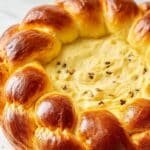
Romanian Easter Pasca Bread Recipe
- Prep Time: 30 minutes
- Cook Time: 40 minutes
- Total Time: 2 hours 40 minutes
- Yield: 8 servings 1x
- Category: Bread
- Method: Baking
- Cuisine: Romanian
- Diet: Vegetarian
Description
Pasca is a traditional Romanian Easter bread featuring a soft, sweet yeast dough encircling a rich cheese filling with raisins and lemon zest. This beautiful braided bread is perfect for festive celebrations and offers a flavorful combination of creamy ricotta and fragrant citrus zest baked to golden perfection.
Ingredients
Pasca Dough
- 1 tablespoon active dry yeast
- ¼ cup warm water
- 1 cup milk
- ½ cup butter, unsalted, melted
- 2 tablespoon lemon zest
- ½ cup sugar
- 4⅔ cups all-purpose flour
- 3 large eggs
- 1 teaspoon vanilla extract
Cheese Filling
- 1 pound ricotta cheese
- 2 large eggs
- 1 teaspoon vanilla extract
- ¼ cup sugar
- ½ cup raisins
- 1 tablespoon lemon zest
- 1 egg, beaten (for egg wash)
Instructions
- Activate yeast: In a bowl, add the yeast and warm water. Stir gently and let it sit for 10 to 15 minutes until the yeast bubbles up, indicating activation. Optionally, add 1 tablespoon of sugar from the dough sugar to help yeast activate. If no bubbles form, discard and start with fresh yeast.
- Prepare milk mixture: In a saucepan, combine milk, melted butter, lemon zest, and sugar. Warm over medium-low heat until butter melts and sugar dissolves, but do not boil. Remove from heat and whisk in the eggs.
- Mix dough: In the mixer bowl, add flour, the warm milk mixture, and activated yeast mixture. Using a dough hook, mix for about 5 minutes until well combined and the dough pulls away from the sides, forming a soft and slightly sticky dough.
- First rise: Lightly oil a large bowl with 1 tablespoon vegetable oil, place the dough inside, and rub the other tablespoon of oil over the dough surface. Cover with plastic wrap and let rise in a warm, draft-free spot until doubled in size, about 1 to 2 hours.
- Preheat oven and prepare pan: Preheat your oven to 350°F (180°C). Line a large baking sheet with parchment paper.
- Shape dough: Divide the dough into 4 equal pieces. Roll one piece into a 10-inch circle and place it on the baking sheet. Divide the remaining 3 pieces into halves, creating 6 pieces total. Roll each piece into long thin ropes about 3 feet long. Braid the ropes and arrange them in a circle around the dough circle on the baking sheet. Let the shaped dough rise again until doubled.
- Make cheese filling: Mix ricotta cheese, eggs, vanilla extract, sugar, raisins, and lemon zest together until combined.
- Assemble Pasca: Pour the cheese filling into the center of the dough circle, inside the braided border.
- Apply egg wash and bake: Brush the dough with the beaten egg wash. Bake in the oven for 40 to 45 minutes until the crust is a deep golden brown but not burnt.
- Cool and serve: Allow the Pasca to cool completely before slicing to make handling easier. Serve at room temperature or slightly warm, optionally with sour cream or jam.
Notes
- Knead the dough well until smooth and elastic to develop gluten structure, but avoid over-kneading to prevent toughness.
- Ensure the dough rises fully in a warm, draft-free environment for best texture and volume.
- Soak raisins in warm water or rum before adding for plumper raisins and to prevent burning during baking.
- Brushing with egg wash yields a shiny, golden crust; sprinkle sugar on top for extra sweetness and crunch if desired.
- Cool the Pasca completely before slicing to prevent it from falling apart and to improve texture.


