

There’s something downright irresistible about the juicy tender slices of beef paired with silky ramen noodles drenched in a sweet-savory sauce—that’s exactly why the Mongolian Beef Ramen Stir-Fry Recipe has become one of my go-to weeknight wonders. It’s got that perfect balance of cozy comfort and bold flavors that keep me coming back for more.

Why You’ll Love This Recipe
- Quick & Flavorful: You’ll be amazed how fast this dish comes together without sacrificing bold, mouthwatering flavors.
- Perfect Weeknight Meal: It’s easy enough for a casual dinner but tasty enough to impress family or friends.
- Balanced Texture: Tender beef, crisp bell peppers, and silky ramen noodles marry beautifully in every bite.
- Customizable: You can switch up veggies, spice level, or protein to suit your tastes and pantry.
Ingredients You’ll Need
These ingredients work incredibly well together, creating layers of flavor without needing a ton of complicated prep. Keep an eye out for fresh flank steak and good-quality soy sauce to really elevate the dish!

- Flank steak: Extra thin slices give you tender, bite-sized pieces that soak up the sauce beautifully.
- Cornstarch: Helps create that crave-worthy slightly crispy coating on the beef.
- Vegetable oil: Neutral oil perfect for searing without burning.
- Green bell pepper: Adds a subtle sweetness and crunch to balance the dish.
- Ramen noodles: I prefer fresh or dried, just cook them until tender but still a bit firm.
- Green onions: For a fresh, slightly pungent garnish that brightens up the whole plate.
- Sesame oil: Just a little whisked into the sauce brings a deep nutty aroma.
- Soy sauce (low sodium): Use low sodium to better control saltiness.
- Brown sugar: Sweetens and balances the salty savory elements of the sauce.
- Chicken broth (low or no sodium): Adds body to the sauce with a light savory note.
- Garlic: Fresh minced garlic is key for an irresistibly fragrant sauce.
- Red pepper flakes: Just enough kick to keep things exciting without overpowering.
Variations
I love how this Mongolian Beef Ramen Stir-Fry Recipe is a blank canvas that’s easy to tweak depending on what you have on hand or your dietary needs. Feel free to make it your own!
- Add More Veggies: Sometimes I toss in shredded carrots, snap peas, or mushrooms for extra texture and color, and it never disappoints.
- Swap the Beef: For a lighter twist, chicken or tofu works great when thinly sliced and cooked the same way.
- Spice It Up: If you like heat, add a splash of sriracha or extra red pepper flakes – that kick elevates the dish beautifully.
- Gluten-Free Version: Use tamari instead of soy sauce and swap ramen noodles for rice noodles to keep it gluten-free.
How to Make Mongolian Beef Ramen Stir-Fry Recipe

Step 1: Coat the Beef Perfectly
Start by slicing your flank steak thinly against the grain — this helps keep the beef tender instead of tough and chewy. Then, toss the strips in cornstarch inside a large Ziploc bag. Shake it up until every piece is well coated. This little step is my secret for that magical crispy outside while staying juicy inside.
Step 2: Brown the Beef in Batches
Heat vegetable oil in a non-stick skillet on medium-high and work in 2 or 3 batches so the steak pieces get plenty of contact with the pan and don’t steam together. You want nice browning, which locks in flavor. I’ve learned adding oil between batches keeps the meat from sticking and scorching. Once browned, set the beef aside and drain excess oil from the skillet.
Step 3: Sauté the Bell Peppers
In that same skillet, toss in the sliced green bell peppers and cook for just a few minutes until they soften slightly but still have a bit of crunch. This quick sauté keeps their freshness and vibrant color, which I love for balancing the dish’s richness.
Step 4: Whip Up the Flavorful Sauce
Next, pour in sesame oil, soy sauce, brown sugar, minced garlic, chicken broth, and red pepper flakes right into the skillet. Stir and let it simmer on medium heat, reducing until the sauce thickens and cuts down by about a quarter. This can take around 10 minutes. Don’t rush this step—well-reduced sauce means every noodle and beef piece is coated in deep, layered flavor.
Step 5: Cook the Ramen Noodles
While the sauce is working its magic, cook your ramen noodles according to the package instructions. I recommend draining them just before they’re fully soft—they’ll finish cooking and soaking up sauce in the next step.
Step 6: Bring It All Together
Now comes the fun part—return the beef and bell peppers to the skillet with your luscious sauce, toss to coat everything evenly. Then gently fold in the cooked ramen so each strand is rich with that sticky, sweet-savory sauce. Finish by sprinkling chopped green onions on top for freshness and serve right away.
Pro Tips for Making Mongolian Beef Ramen Stir-Fry Recipe
- Slice Against the Grain: This makes a huge difference in tenderness—never slice with the grain or your beef will be chewy.
- Don’t Overcrowd the Pan: Cooking the beef in batches gives you that perfect sear instead of steaming the meat.
- Watch Your Sauce Reduction: I learned to keep an eye so it thickens but doesn’t evaporate fully—you want enough to coat noodles generously.
- Rest and Toss Gently: After adding noodles, toss slowly to avoid breaking them—this keeps the dish looking and tasting perfect.
How to Serve Mongolian Beef Ramen Stir-Fry Recipe

Garnishes
I usually top this stir-fry with freshly chopped green onions for a pop of color and sharp bite. Sometimes, I like to sprinkle toasted sesame seeds on top—it’s a quick way to add extra nuttiness and crunch that pair beautifully with the sesame-infused sauce.
Side Dishes
My family goes crazy for this with simple steamed broccoli or snap peas on the side—something fresh and crunchy to balance the richness. Sometimes I serve it alongside a crunchy Asian slaw or even a light cucumber salad with a tangy dressing to cut through the sweetness.
Creative Ways to Present
For special occasions, I like serving this in individual mini-wok-style dishes or colorful bowls, sprinkled with extra green onions and a wedge of lime for a pop of brightness. It also looks fantastic topped with crispy fried shallots if you want an elevated restaurant-style touch at home.
Make Ahead and Storage
Storing Leftovers
I store leftover Mongolian Beef Ramen Stir-Fry in an airtight container in the fridge for up to 3 days. The noodles soak up the sauce overnight, so I usually keep an extra splash of broth on hand to refresh it when reheating.
Freezing
While I haven’t frozen this often, I’ve found that freezing works better when the sauce and beef are separated from the noodles. Freeze beef and sauce in one container and cooked noodles in another, then reheat together for best texture.
Reheating
I gently reheat leftovers in a skillet over medium heat, adding a bit of broth or water to loosen the sauce. This helps prevent noodles from drying out and brings back that saucy, yummy goodness you crave.
FAQs
-
Can I use a different cut of beef for this Mongolian Beef Ramen Stir-Fry Recipe?
Absolutely! While flank steak is ideal for its thin slices and tenderness, you can swap it with skirt steak, sirloin, or even ribeye. Just be sure to slice very thinly against the grain to maintain tenderness. Just adjust cooking time accordingly since some cuts might cook faster or need a quick marinade.
-
Is it okay to use instant ramen noodles?
You can use instant ramen, but I recommend cooking and draining them just before they’re fully tender to avoid mushiness. Fresh or dried ramen noodles typically hold up better to stir-frying and tossing with sauce, giving you a more satisfying texture.
-
How spicy is this Mongolian Beef Ramen Stir-Fry Recipe?
This recipe has just a gentle kick from red pepper flakes, which you can easily adjust according to your taste. If you prefer it milder, simply reduce or omit the flakes; for more heat, add sriracha or extra chili flakes.
-
Can I make this recipe vegetarian or vegan?
Yes! Swap the flank steak for firm tofu or seitan sliced thinly, and use vegetable broth instead of chicken broth. Check your soy sauce to ensure it’s vegan-friendly, and you’ll have a tasty plant-based version that doesn’t skimp on flavor.
-
What’s the best way to prevent the beef from sticking together?
Coating each slice of beef with cornstarch individually and cooking in small batches helps prevent sticking and promotes even browning. Make sure your skillet and oil are hot before adding the beef, and avoid overcrowding the pan.
Final Thoughts
This Mongolian Beef Ramen Stir-Fry Recipe has quickly become a staple in my kitchen because it delivers such bold flavors with minimal fuss. I love how adaptable it is, and almost every time I make it, someone asks for seconds or the recipe itself! If you want a dinner that tastes like a restaurant favorite but can be whipped up on any night, I really encourage you to give this one a try—you might just find your new weeknight favorite.
Print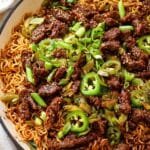
Mongolian Beef Ramen Stir-Fry Recipe
- Prep Time: 20 minutes
- Cook Time: 30 minutes
- Total Time: 1 hour 15 minutes
- Yield: 4 servings 1x
- Category: Main Course
- Method: Stovetop
- Cuisine: Asian
Description
A flavorful Mongolian Beef Ramen dish combining tender flank steak coated in cornstarch, sautéed bell peppers, and savory homemade sauce tossed with tender ramen noodles and topped with fresh green onions.
Ingredients
Beef and Coating
- 1½ pound flank steak
- ¼ cup cornstarch
- ¼ cup vegetable oil
Vegetables and Noodles
- 1 green bell pepper (sliced into thin strips)
- 8 ounce ramen noodles (uncooked)
- 3 green onions (chopped)
Sauce
- 2 tablespoon sesame oil
- ¾ cup soy sauce (low sodium)
- ⅔ cup brown sugar (packed)
- 1¼ cup chicken broth (low sodium or no sodium added)
- 4 cloves garlic (minced)
- ¼ teaspoon red pepper flakes
Instructions
- Prepare the beef: Slice the flank steak thinly against the grain. Place beef and cornstarch in a large zip-top bag, seal, and shake until the beef pieces are evenly coated with cornstarch.
- Cook the beef: Heat vegetable oil in a non-stick skillet over medium-high heat. Add the beef in batches, cooking until browned on all sides. Add more oil if needed. Remove cooked beef to a plate and discard the used oil from the skillet.
- Sauté the bell pepper: In the same skillet, add the sliced green bell pepper and sauté for a few minutes until just softened. Remove to a plate and set aside.
- Make the sauce: Add sesame oil, soy sauce, brown sugar, garlic, chicken broth, and red pepper flakes to the skillet. Stir and cook over medium heat for about 10 minutes until the sauce thickens and reduces by about a quarter but still remains saucy enough for the noodles.
- Cook the ramen noodles: Meanwhile, cook ramen noodles according to package instructions, then drain.
- Combine and serve: Return the cooked beef and bell pepper to the skillet with the sauce. Add the cooked ramen noodles and toss everything together to coat evenly. Garnish with chopped green onions and serve hot.
Notes
- Slice the flank steak very thinly against the grain to ensure tender beef.
- Cook the beef in batches to avoid overcrowding and sticking.
- If sauce thickens too much, add a splash of water or broth to loosen it up.
- For a spicier kick, increase the red pepper flakes according to taste.
- Use low sodium soy sauce and chicken broth to control salt levels.
- Ramen noodles can be substituted with udon or rice noodles if preferred.


