

There’s something deeply satisfying about a warm, hearty bowl of soup, especially when it’s packed with tender beef and comforting noodles. This Beef Noodle Soup Recipe is one of those dishes that instantly makes you feel cozy and cared for, with a rich broth and plenty of flavor that’ll have your family asking for seconds.

Why You’ll Love This Recipe
- Rich, Flavorful Broth: Slow simmering the beef and veggies creates a deeply satisfying, savory base.
- Tender Meat Every Time: My method ensures the beef stays juicy, not tough or chewy.
- Perfect Noodle Texture: Cooking noodles separately means they stay nice and springy, not soggy.
- Customizable Comfort: You can easily tweak the ingredients to fit what you have on hand or your taste.
Ingredients You’ll Need
Each ingredient plays a role in building layers of flavor and texture for this Beef Noodle Soup Recipe. I always recommend fresh veggies and a good quality beef broth, as they make all the difference in the final taste.

- Mushrooms: I like white button mushrooms because they cook quickly and add lovely umami without overpowering the soup.
- Olive oil: Use a good quality one for sautéing to develop those rich caramelized flavors.
- Stew meat: Choosing the right cut, like chuck or rump, helps the beef become tender as it simmers.
- Flour: Helps to lightly coat the beef, promoting browning and slightly thickening the broth.
- Dry red wine: This is essential for deglazing and adding depth — Cabernet or Merlot work beautifully.
- Butter: Adds richness when cooking the aromatics.
- Yellow onion: Foundational to the flavor base of the soup, giving sweetness as it softens.
- Carrots: Brings a subtle natural sweetness and color.
- Celery: Contributes a mild, fragrant earthiness.
- Garlic: Minced fresh for that necessary punch.
- Worcestershire sauce: A secret behind the savory umami boost.
- Bay leaf: Adds a subtle layer of herbal aroma.
- Beef broth: The soul of the soup, preferably homemade or low sodium for control.
- Chicken broth: Adds a nice contrast when mixed in with beef broth.
- Frozen peas: For a pop of color and sweetness near the end of cooking.
- Egg noodles: I use wavy egg noodles because they hold the broth well without getting mushy.
- Salt, pepper, and seasoning blend: A mix of spices like garlic salt, celery salt, mustard powder, thyme, and rosemary bring it all together.
- Fresh parsley: Garnish to brighten the final presentation and add a fresh herb note.
Variations
I love how flexible this Beef Noodle Soup Recipe is—it’s easy to make it your own by swapping ingredients or adjusting seasonings. Don’t be afraid to experiment a bit to match your preferences or what’s in your pantry.
- Mushroom-Free Version: I’ve made it without mushrooms for friends who aren’t fans, and it’s still wonderfully savory.
- Slow Cooker Adaptation: Perfect for busy days—just brown the beef first, then toss everything in your slow cooker for tender results.
- Vegetable Boost: Sometimes I add diced potatoes or parsnips for extra heartiness and texture.
- Gluten-Free Nudging: Use gluten-free flour and noodles to adapt this recipe without losing any soul.
How to Make Beef Noodle Soup Recipe

Step 1: Sauté the Mushrooms
Start by heating about a tablespoon of olive oil in your soup pot over medium-high heat. I like to cook the mushrooms on each side for 3-4 minutes until they turn a golden color. This step is key because cooking them separately preserves their texture and flavor, so they don’t get rubbery later in the soup. If your pan gets dry, add a splash more oil. A sprinkle of salt halfway through helps draw out moisture and boosts flavor. Once done, set them aside—you’ll add them back in just before serving.
Step 2: Prepare and Brown the Beef
Cut your stew meat into 1-inch cubes—making sure to discard large chunks of fat but keeping some marbling for flavor. Toss the beef with the seasoning blend I recommend in this recipe, then sprinkle with flour and give it another toss. The flour helps create a great crust when browning. Heat a tablespoon or two of olive oil in the same pot and brown the beef in batches to avoid overcrowding. Each side needs just about 45 seconds to develop some color; don’t cook it through here because it’ll finish cooking later in the soup. When browned, transfer it all to a plate and don’t worry if the inside looks red—that’s perfect.
Step 3: Build the Soup Base
Pour the dry red wine into the pot and stir, scraping up all those browned bits stuck to the bottom—this is where a ton of flavor lives! Let the wine reduce by about half, which usually takes 4-5 minutes over medium heat. Then add butter, diced onion, carrots, and celery. Cook these until soft and aromatic, around 5 minutes. Toss in minced garlic, Worcestershire sauce, and the soup seasoning blend, cooking for another 2 minutes to meld everything together.
Step 4: Simmer the Soup
Add in your beef broth, chicken broth (or all beef broth if you prefer), and the bay leaf. Bring everything to a boil, then reduce the heat to a gentle simmer. Carefully add the seared beef along with any juices from the plate. Cover the pot partially and let it simmer very gently for about 1 hour. This slow simmer is what tenderizes the meat beautifully and deepens the flavors in the broth. Be sure to stir occasionally and watch the heat so it doesn’t boil—if it does, just lower the temperature. This patience definitely pays off.
Step 5: Cook Noodles and Finish the Soup
While your soup simmers, bring a separate pot of salted water to a boil and cook your egg noodles according to the package instructions. Cooking noodles separately keeps them from soaking up too much broth and getting mushy. Add frozen peas to the soup in the last few minutes of cooking so they stay bright and sweet. Once noodles are done, drain and set aside. Add the cooked mushrooms back to the soup and remove the bay leaf. When you’re ready to serve, place noodles in bowls and ladle the savory soup on top. Garnish with fresh parsley for that finishing touch.
Pro Tips for Making Beef Noodle Soup Recipe
- Choose the Right Cut: I learned that chuck roast or rump gives the best tender results when simmered slow — much better than randomly buying stew meat.
- Don’t Skip Wine: The red wine deglazes the pot beautifully, lifting those flavorful bits stuck on the bottom and adding complexity.
- Cook Noodles Separately: This trick keeps your noodles springy and stops the soup from thickening too much as it sits.
- Simmer Gently & Patiently: Avoid boiling the soup too hard or the beef can become tough; this gentle simmer is what gives you melt-in-your-mouth beef.
How to Serve Beef Noodle Soup Recipe

Garnishes
I always top my bowls with a sprinkle of fresh parsley—it adds the perfect pop of color and a fresh herbal aroma that balances the rich broth. Sometimes, I’ll add a few chili flakes if I’m in the mood for a little heat or even a squeeze of fresh lemon for brightness.
Side Dishes
A warm, crusty bread or a simple side salad pairs wonderfully with this soup. My family loves having garlic breadsticks alongside for dipping, which feels a little indulgent but oh-so-good.
Creative Ways to Present
For special occasions, I like serving the soup in small bread bowls for a rustic look that’s fun to eat. Another idea is to garnish with a dollop of crème fraîche or sour cream and sprinkle some freshly cracked black pepper on top for an elegant touch.
Make Ahead and Storage
Storing Leftovers
I store leftover soup in airtight containers and keep it in the fridge for up to 3 days. I find that separating the noodles from the soup before storing helps keep everything tasting fresh and prevents the noodles from turning mushy.
Freezing
This soup freezes beautifully, but I always freeze it without the noodles—adding fresh cooked noodles when reheating keeps the texture delightful. Just portion it in freezer-safe containers and it keeps for up to 3 months.
Reheating
When reheating, I simmer the soup gently on the stove until warmed through, then add fresh cooked noodles right before serving. This keeps the broth rich and the noodles perfectly tender without becoming mushy.
FAQs
-
Can I use other cuts of beef besides stew meat?
Absolutely! Chuck roast, rump roast, or bottom round are great alternatives. Just be prepared to cook the soup slowly so the tougher cuts become tender and flavorful.
-
Why do you recommend cooking noodles separately?
Cooking noodles separately prevents them from absorbing too much broth and turning mushy, especially if you’re not eating the soup right away. This way, you maintain a perfect noodle texture in every bowl.
-
Can I make this soup in a slow cooker?
Yes! After browning the beef and deglazing the pot with wine, transfer everything to your slow cooker, then cook on low for 7.5-8 hours or high for 3.5-4 hours. Add peas and mushrooms near the end for the best flavor and texture.
-
What can I substitute for red wine?
If you don’t use wine, an equal mixture of beef broth and red wine vinegar works well to deglaze your pot and add some acidic brightness to the broth.
Final Thoughts
This Beef Noodle Soup Recipe has become my go-to for chilly evenings or anytime I want a hug in a bowl. It’s comforting but doesn’t feel heavy, and the way the flavors build slowly is truly special. I’m confident you’ll find it just as rewarding to make and share with your loved ones as I have over the years—so grab your pot and give it a try. You won’t regret it!
Print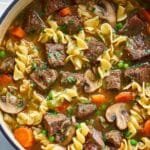
Beef Noodle Soup Recipe
- Prep Time: 15 minutes
- Cook Time: 1 hour 20 minutes
- Total Time: 1 hour 35 minutes
- Yield: 8 servings 1x
- Category: Soup
- Method: Stovetop
- Cuisine: American
- Diet: Low Fat
Description
This hearty Beef Noodle Soup features tender stew meat cooked in a rich broth with mushrooms, vegetables, and egg noodles, creating a comforting and flavorful meal perfect for any season.
Ingredients
Soup
- 12 oz. mushrooms, sliced, rinsed, and dried
- 2–3 tablespoons olive oil
- 2 lbs. stew meat, cut into 1-inch cubes
- ¼ cup flour
- ½ cup dry red wine (such as Cabernet Sauvignon, Merlot, or Pinot Noir)
- 3 tablespoons butter
- 1 yellow onion, diced
- ¾ cup carrots, diced
- 2 ribs celery, diced
- 3 cloves garlic, minced
- 1 tablespoon Worcestershire sauce
- 1 bay leaf
- 7 cups beef broth
- 1 cup chicken broth (or additional beef broth if preferred)
- ¾ cup frozen peas
- 2 cups uncooked egg noodles (about 4 oz.)
- Parsley, for garnish
Meat Seasoning
- ½ teaspoon salt
- ½ teaspoon black pepper
- ½ teaspoon garlic salt
- ½ teaspoon celery salt
- ½ teaspoon onion powder
Soup Seasoning
- 1 teaspoon mustard powder
- ½ teaspoon dried thyme
- ½ teaspoon dried rosemary
Instructions
- Sauté the Mushrooms: Heat 1 tablespoon of olive oil in a soup pot over medium-high heat. Add the sliced mushrooms and sauté for 3-4 minutes on each side, adding a splash of olive oil if needed. Sprinkle with a little salt halfway through cooking for enhanced flavor. Set the mushrooms aside once cooked.
- Prepare the Beef: Cut the stew meat into 1-inch cubes, removing any large pieces of fat but keeping marbled fat intact. Combine the meat seasonings together, sprinkle evenly over the meat, and toss to coat. Then sprinkle flour over the meat and toss again to coat the cubes lightly.
- Brown the Beef: Heat 1-2 tablespoons of olive oil in the same pot over medium-high heat. Add the beef cubes in batches to avoid overcrowding and brown each side for about 45 seconds. Add oil as needed. Transfer the browned meat to a plate; the inside should remain red or cold.
- Deglaze and Prepare Vegetables: Pour the red wine into the pot and use a silicone spatula to scrape the bottom and sides, loosening browned bits. Let the wine reduce by half, about 4-5 minutes. Add butter, diced onions, carrots, and celery; cook until softened, approximately 5 minutes. Stir in garlic, Worcestershire sauce, mustard powder, thyme, and rosemary; cook for another 2 minutes.
- Add Broth and Simmer: Pour in the beef broth and chicken broth, add the bay leaf, and bring the mixture to a boil. Reduce heat to a gentle simmer and return the seared beef along with any juices. Partially cover and simmer gently on medium-low heat for 1 hour, stirring occasionally and adjusting heat to prevent boiling. This slow simmer tenderizes the meat and concentrates the broth.
- Cook Noodles and Add Peas: While the soup simmers, boil the egg noodles separately in salted water according to package instructions, then drain. During the last few minutes of simmering, add frozen peas to the soup.
- Finish the Soup: Stir the cooked mushrooms into the soup and remove the bay leaf. To serve, place cooked noodles in bowls and ladle the hot soup on top. Garnish with fresh parsley and enjoy immediately.
Notes
- For tender beef, use sirloin or tenderloin roasts for quicker cooking, or chuck roast and rump roast for slow cooker methods.
- If avoiding wine, substitute with equal parts beef broth and 2 tablespoons red wine vinegar or use dry white wine.
- The chicken broth adds depth to the flavor; use all beef broth if preferred.
- Cooking mushrooms separately preserves their texture and flavor, preventing them from becoming rubbery in the soup.
- Use Riesa Wavy Egg Noodles or a similar egg noodle variety for best results.
- Tenderize whole cuts of beef with a meat mallet before cubing for extra tenderness.
- Store leftovers in an airtight container and refrigerate for up to 3 days or freeze up to 3 months; freeze noodles separately to avoid mushiness.
- Slow cooker instructions: After browning beef and deglazing, transfer ingredients to slow cooker and cook on low for 7½ to 8 hours or high for 3½ to 4 hours.


