

There’s something so fresh and bright about springtime flavors, and this Spring Pea Risotto Recipe beautifully captures that vibrant feeling. Creamy, tangy, and bursting with the sweetness of fresh peas, it’s the kind of dish that feels both fancy and comforting all at once.

Why You’ll Love This Recipe
- Fresh, spring flavors: The fresh peas and lemon make it bright and refreshing all year long.
- Creamy texture without fuss: No cream needed—just traditional slow cooking of arborio rice for that perfect, velvety bite.
- Adaptable and easy: You can veganize it, swap herbs, and still get great results every time.
- Impress without stress: It looks beautiful on the plate but is surprisingly forgiving and straightforward.
Ingredients You’ll Need
Each ingredient plays a crucial role in this Spring Pea Risotto Recipe, coming together to deliver layers of flavor and that classic creamy texture. When shopping, aim for the freshest peas you can find—frozen work in a pinch but fresh really elevates the dish.

- Fresh peas: Their natural sweetness and brightness make the risotto pop with flavor.
- Unsalted butter: For sautéing and richness without overwhelming saltiness.
- Shallot: Adds a subtle sweetness that’s softer than onions and blends perfectly.
- Garlic: A little punch of savory aroma to build flavor.
- Arborio rice: The star of risotto—its starchiness creates that creamy texture.
- White cooking wine: Helps deglaze the pan and adds depth to the flavor.
- Fresh thyme: Earthy herbaceous note that complements peas beautifully.
- Vegetable stock: The warming liquid that slowly cooks the rice—adds savory richness.
- Parmesan cheese: For that signature cheesy creaminess; can be omitted for vegan version.
- Lemon zest and juice: Injects fresh, bright citrus balance.
- Fresh mint: A fragrant finishing touch that lifts the dish.
- Salt and pepper: To season and bring everything together.
Variations
I love making this recipe my own depending on what I have on hand or what mood I’m in. Feel free to tweak herbs or cheese, and you’ll find that even small changes give this risotto a fresh twist.
- Herb swaps: I’ve tried basil and tarragon instead of mint, and both are fantastic for different flavor profiles.
- Make it vegan: Just leave out the parmesan; adding nutritional yeast can add a cheesy note if you want.
- Add protein: Stir in cooked shrimp or chicken for a heartier main dish.
- Seasonal swaps: Swap peas for asparagus tips or fresh green beans when spring peas aren’t available.
How to Make Spring Pea Risotto Recipe

Step 1: Blanch the Fresh Peas
Start by bringing a big pot of salted water to a rolling boil—this cooks the peas quickly without losing their snap. As soon as you drop them in, set a bowl of ice water nearby. Blanch the peas for just 1-2 minutes, then plunge them into the ice bath to stop cooking immediately. This keeps them vibrant and sweet—trust me, it makes all the difference.
Step 2: Warm the Stock
While the peas cool, heat your vegetable stock until gently simmering. You can do this on the stove or even in the microwave if you’re short on time. Keeping it warm makes the risotto cook evenly and smoothly without lowering the temperature every time you add liquid.
Step 3: Sauté Shallots and Garlic
Melt butter over medium heat in a large skillet or heavy pot. Add minced shallots and garlic, letting them cook slowly until soft, fragrant, and translucent—around 5 minutes. This base layer is where the flavor starts to build, so don’t rush it!
Step 4: Toast the Arborio Rice
Stir in the arborio rice and let it toast for about 2 minutes, stirring frequently so it doesn’t stick or burn. You’ll notice the grains turn a bit translucent with a slightly nutty aroma bubbling up—that’s your cue to move to the next step!
Step 5: Deglaze with Wine
Pour in the white wine to deglaze the pan, scraping up any browned bits from the bottom. This step adds a lovely depth and acidity. Let it simmer until mostly absorbed, about 1-2 minutes.
Step 6: Gradually Add Stock and Thyme
Now the patient part: add warm stock ½ cup at a time, stirring until each addition is mostly absorbed before adding the next. Stir gently but steadily — this coaxing releases the rice’s starch for that classic creamy risotto texture. Toss in fresh thyme early on so it can infuse flavor as the rice cooks, which usually takes around 18-20 minutes.
Step 7: Finish with Peas, Cheese, and Lemon
Once the rice is perfectly tender but still has a slight bite, stir in the blanched peas, parmesan cheese, lemon juice, salt, and pepper. Taste and adjust seasoning — the lemon really wakes up the whole dish here, so don’t skip it!
Step 8: Garnish and Serve
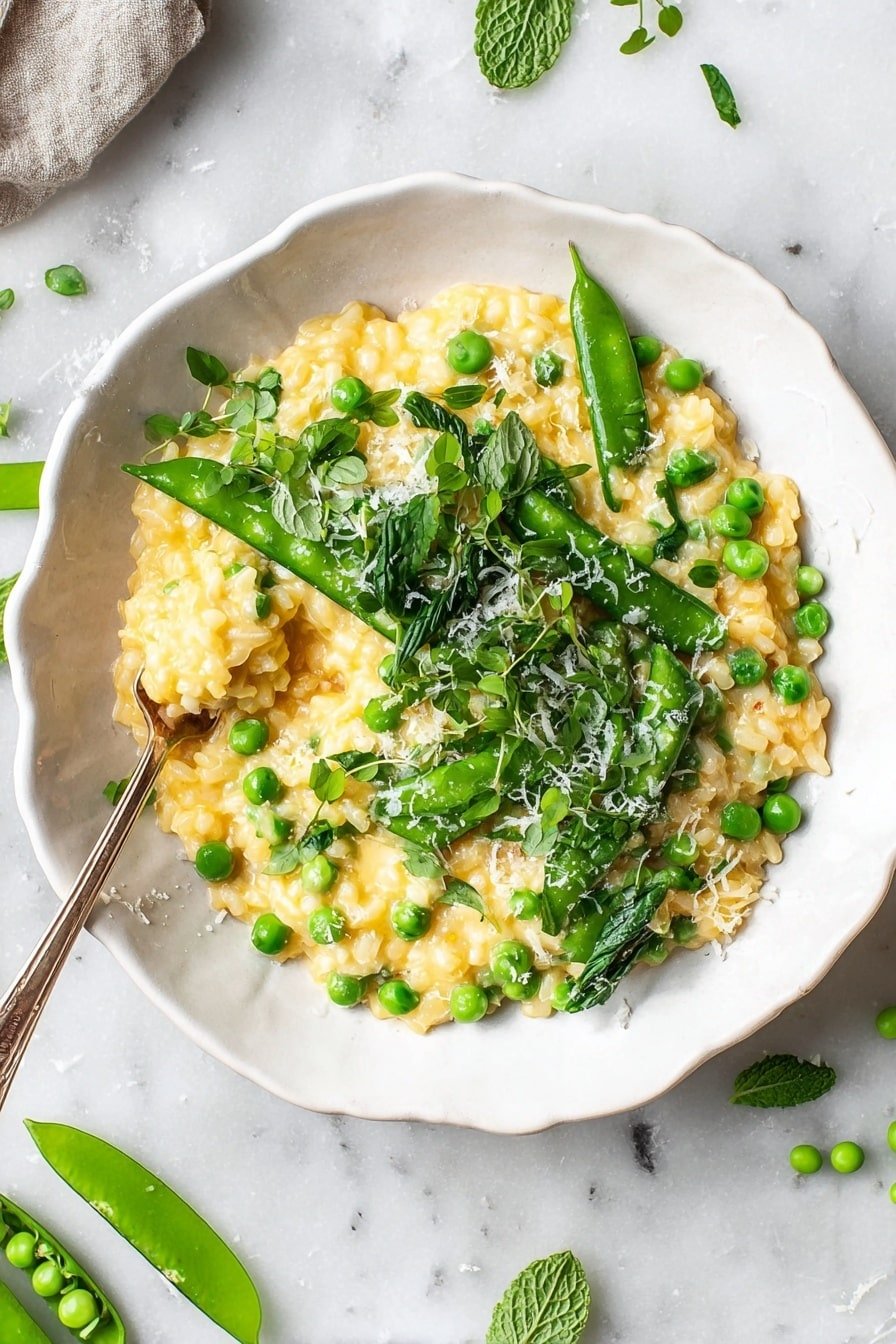
Top your risotto with fresh mint and lemon zest for an added burst of spring flavor and aroma. I also love adding a handful of microgreens or a few extra fresh peas on top — it makes for a beautiful presentation and a nice contrast in texture.
Pro Tips for Making Spring Pea Risotto Recipe
- Hot Stock Always: Keep your stock warm throughout so the cooking temperature stays steady and your rice cooks evenly.
- Slow and Steady Stirring: Stir gently but frequently to release the rice’s starch—trust me, this creates that creamy texture that everyone loves.
- Taste Early and Often: I check the texture about 15 minutes in and adjust the amount of stock or cooking time if needed, since rice varieties vary.
- Don’t Overcook Peas: Blanch the peas just until bright green and tender-crisp—overdoing this makes them soggy and dull.
How to Serve Spring Pea Risotto Recipe
Garnishes
I usually finish with delicate ribbons of fresh mint and a sprinkling of lemon zest—the combination really highlights the freshness of the peas and lifts the entire plate. A few microgreens or freshly cracked black pepper dots also add a little wow factor without extra effort.
Side Dishes
This risotto pairs beautifully with a crisp green salad dressed simply with lemon vinaigrette or roasted spring vegetables like asparagus or baby carrots. For a bit of protein, lightly garlic-shrimp or grilled chicken work perfectly alongside.
Creative Ways to Present
For a dinner party, I like to serve this risotto in shallow bowls garnished with edible flowers and fresh pea shoots—it feels fancy but is totally doable. You can also try piping the risotto into little cups for elegant passed appetizers, topped with a pea puree drizzle for extra flair.
Make Ahead and Storage
Storing Leftovers
I usually transfer leftovers to an airtight container and refrigerate them for up to 2 days. The risotto thickens as it cools, but that’s totally normal.
Freezing
Risotto doesn’t freeze perfectly because the texture changes, but if you want to save extras, freeze in small portions. When thawing, you’ll want to add a bit of stock or water to help loosen it back up.
Reheating
To reheat, warm gently on the stove with a splash of vegetable stock or water, stirring frequently until creamy and heated through. Microwaving works too, but the stove method preserves texture best.
FAQs
-
Can I use frozen peas for this Spring Pea Risotto Recipe?
Absolutely! Frozen peas are a great substitute when fresh peas aren’t available. Just thaw them and add them later in the cooking process to avoid overcooking. The flavor won’t be quite as bright as fresh, but still delicious.
-
What type of wine should I use?
I recommend a dry white wine like Sauvignon Blanc or Pinot Grigio. Avoid sweet wines, as they can alter the balance of flavors. If you prefer not to use wine, you can substitute an equal amount of stock, though it won’t have quite the same depth.
-
How do I know when the risotto is done?
The rice should be tender but still have a slight “bite” in the center (al dente). It’ll look creamy but not mushy. Taste frequently near the end of cooking to avoid overcooking the grains.
-
Can I make this risotto vegan?
Yes! Simply skip the parmesan cheese and use a plant-based butter or oil. Nutritional yeast works well as a cheesy substitute if you want to keep that umami flavor.
-
What’s the best way to store leftover risotto?
Store leftovers in an airtight container in the fridge and consume within 2 days. To reheat, add a splash of stock or water and warm gently on the stove while stirring to bring back the creamy texture.
Final Thoughts
I absolutely love how this Spring Pea Risotto Recipe brings springtime to the table with minimal fuss and maximum flavor. It’s become a go-to for me when I want something comforting yet fresh. I really encourage you to give it a try—you’ll enjoy the creamy texture paired with those sweet peas and zingy lemon. It’s one of those dishes you can easily make during the week but also serve proudly when guests drop by. Trust me, once you nail this risotto, it’ll become a forever favorite.
Print
Spring Pea Risotto Recipe
- Prep Time: 10 minutes
- Cook Time: 30 minutes
- Total Time: 40 minutes
- Yield: 4 servings 1x
- Category: Main Course
- Method: Stovetop
- Cuisine: Italian
- Diet: Vegetarian
Description
This Spring Pea Risotto is a creamy, flavorful Italian classic enhanced with fresh peas, aromatic shallots, garlic, and a zesty lemon finish. Perfect for a comforting yet elegant meal, it features arborio rice cooked slowly in vegetable stock and finished with parmesan cheese and fresh herbs for a vibrant springtime dish.
Ingredients
Main Ingredients
- 1 ½ cups fresh peas
- 2 tablespoons unsalted butter
- 1 large shallot, diced
- 2 cloves garlic, minced
- 1 cup arborio rice
- ½ cup white cooking wine
- 1 teaspoon fresh thyme
- 4 cups vegetable stock (substitute chicken stock or water)
- ½ cup parmesan cheese, shredded
- 1 tablespoon lemon zest
- 2 teaspoons lemon juice
- 1 tablespoon fresh mint (substitute other fresh herbs like basil)
- salt and pepper, to taste
Instructions
- Blanch the peas: Bring a large pot of salted water to a rolling boil. Fill a large bowl with ice water and set aside. Drop the peas into the boiling water and blanch for 2 minutes. Immediately transfer the peas to the ice bath for about 20 seconds to stop cooking. Drain and set aside, ensuring peas remain crisp and bright green.
- Heat the stock: In a medium pot, heat your vegetable stock over medium heat until simmering. Remove from heat and keep warm.
- Sauté aromatics: In a large skillet or stockpot, melt the butter over medium heat. Add diced shallots and minced garlic, sautéing for about 5 minutes until soft and fragrant.
- Toast the rice: Add the arborio rice to the skillet and stir frequently for 2 minutes to toast the grains lightly.
- Deglaze with wine: Pour in the white cooking wine and stir to deglaze the pan, scraping up any browned bits from the bottom.
- Add stock and thyme gradually: Add ½ cup of the warm vegetable stock along with the fresh thyme. Stir the risotto until the liquid is fully absorbed. Continue adding stock ½ cup at a time, stirring frequently, until the rice is cooked through and creamy, about 18-20 minutes in total.
- Finish with peas and seasoning: Stir in the parmesan cheese, blanched peas, and lemon juice. Taste and season with salt and pepper as needed.
- Garnish and serve: Garnish the risotto with fresh mint or other herbs and sprinkle lemon zest on top. Serve immediately while warm.
Notes
- This risotto is vegetarian, and you can make it vegan by omitting the parmesan cheese; it will still be creamy and delicious.
- Check the cooking instructions on your arborio rice and adjust the amount of stock as necessary, typically using a 1:4 ratio of rice to liquid.
- If you don’t have vegetable broth, you can substitute water, though the risotto will have a milder flavor.
- For an extra fresh presentation, add a handful of microgreens or additional fresh peas as garnish.


