There’s something magical about the sizzle and aroma of marinated, thinly sliced beef grilling that never fails to get me excited. I absolutely love how this Korean Beef Bulgogi Recipe comes together so quickly with such intense, balanced flavors—it’s a real crowd-pleaser and perfect for any weeknight dinner or weekend cookout.

Why You’ll Love This Recipe
- Quick Cooking: Thin slices cook in just minutes, making it perfect for busy days.
- Richly Flavored Marinade: The balance of sweet, savory, and spicy is spot-on every time.
- Versatile Serving Options: Great over rice, in wraps, or even as a protein-packed salad topping.
- Authentic Korean Touch: Gochujang and grated pear add that genuine Korean flair you don’t want to miss.
Ingredients You’ll Need
Every ingredient in this Korean Beef Bulgogi Recipe plays a special role—from tenderizing the beef to building complex flavor layers. When you shop, try to get fresh pears and authentic Korean gochujang for the best results.

- Boneless rib eye steak: The marbling makes this cut wonderfully tender and juicy for bulgogi.
- Pear: Acts as a natural meat tenderizer and adds subtle sweetness without overpowering.
- Reduced sodium soy sauce: Provides deep umami while keeping saltiness balanced.
- Brown sugar: Adds caramel notes that complement the savory ingredients.
- Toasted sesame oil: A little bit packs a nutty punch and authentic Korean aroma.
- Garlic: Freshly minced garlic gives the marinade a punchy, bright lift.
- Freshly grated ginger: Brings warmth and a mild zing to each bite.
- Gochujang (Korean red pepper paste): This adds spice, a smoky sweetness, and depth—all essential for bulgogi.
- Vegetable oil: Used for cooking to get that nice sear without overwhelming the marinade flavor.
- Green onions: Think of these as your final fresh crunch and vibrant garnish.
- Toasted sesame seeds: Sprinkle on at the end for a subtle crunch and visual appeal.
Variations
One of my favorite things about this Korean Beef Bulgogi Recipe is how easily you can make it your own—just tweak the spice level or even switch up the protein to keep things fresh and exciting!
- Spicy Kick: I sometimes add a bit more gochujang or a dash of red chili flakes when I’m craving extra heat, and it never disappoints.
- Chicken Bulgogi: When I run out of beef, thinly sliced chicken thighs work wonderfully with the same marinade, just cook a little longer.
- Vegetarian Version: Try marinating thinly sliced mushrooms or tofu to soak up that amazing bulgogi flavor.
- Sweet Soy Variation: Some days I swap brown sugar for honey to add a different type of sweetness; it’s a subtle but lovely twist.
How to Make Korean Beef Bulgogi Recipe

Step 1: Prep the Beef for Maximum Tenderness
Wrap your rib eye steak tightly in plastic wrap, then pop it in the freezer for about 30 minutes. This chilling step is my secret for slicing the beef super thin and even—around 1/4 inch thick—so it cooks up tender and fast without drying out.
Step 2: Whip Up That Heavenly Marinade
In a bowl, mix grated pear, soy sauce, brown sugar, toasted sesame oil, minced garlic, grated ginger, and gochujang until everything’s beautifully combined. The pear might sound unusual, but its enzymes do wonders tenderizing the beef and balancing the marinade’s flavors. Then, seal that marinade and meat together in a gallon-sized Ziploc bag and refrigerate for at least 2 hours—or better yet, overnight—to let those flavors sink in.
Step 3: Get Your Grill Pan Searing Hot
I love using a cast iron grill pan heated over medium-high. Add a tablespoon of vegetable oil, then arrange your marinated beef slices in a single layer. Cook for 2-3 minutes on each side until you see that irresistible char and the beef is cooked through. Work in batches to avoid steaming the meat—trust me, a hot pan and quick cooking are key!
Step 4: Garnish and Serve Immediately
Once cooked, pile the bulgogi on your serving platter and sprinkle with thinly sliced green onions and toasted sesame seeds. The fresh crunch of the green onions paired with the nutty sesame really rounds out this dish in the best way.
Pro Tips for Making Korean Beef Bulgogi Recipe
- Freeze Before Slicing: I discovered this trick with freezing the steak slightly—makes slicing thin, perfect strips so much easier and cleaner.
- Marinate Longer for Tenderness: The longer the beef marinates, especially overnight, the more tender and flavorful it becomes—the flavors deepen beautifully.
- Hot Pan is Key: Don’t crowd your pan; cooking in batches helps get that nice sear instead of stewing your beef in its juices.
- Use Fresh Ingredients: Fresh garlic, ginger, and grated pear contribute layers of freshness and authenticity you won’t get from pre-minced or powdered substitutes.
How to Serve Korean Beef Bulgogi Recipe

Garnishes
I always finish my bulgogi with a generous sprinkle of toasted sesame seeds and plenty of thinly sliced green onions—these add texture and a pop of color that brightens every bite. Sometimes, I toss on a few fresh cilantro leaves or even a dash of gochugaru for extra color and mild heat.
Side Dishes
Pairing bulgogi with steamed jasmine rice or sticky short-grain rice is a no-brainer—and my family goes crazy for kimchi and sautéed spinach on the side. For a fresh twist, I sometimes serve it with crisp lettuce leaves so everyone can make their own wraps with sliced garlic and chili.
Creative Ways to Present
For special occasions, I like to serve bulgogi in lettuce cups with an array of banchan (Korean side dishes) laid out like a festive spread. It turns dinner into an interactive experience everyone loves. Also, stacking bulgogi over a bowl of noodles or mixed greens makes for a colorful and elegant presentation.
Make Ahead and Storage
Storing Leftovers
After cooking, I let the bulgogi cool completely before storing it in an airtight container in the fridge. It holds up beautifully for up to 3 days, and the flavors even seem to meld more.
Freezing
If I want to save some for later, I freeze the raw marinated beef in a freezer-safe bag. When the mood strikes, it thaws quickly in the fridge overnight and cooks just as well as fresh—super handy for meal prep.
Reheating
For leftovers, I reheat the bulgogi gently in a skillet over medium heat with a splash of water or oil to keep it juicy. Microwaving works too, but the pan helps maintain that nice caramelized texture.
FAQs
-
Can I use other cuts of beef for this Korean Beef Bulgogi Recipe?
Absolutely! While rib eye is ideal for its tenderness and marbling, you can also use sirloin, flank steak, or even chuck eye. Just make sure to slice the beef thinly against the grain to keep it tender.
-
How long should I marinate the beef?
At minimum, 2 hours will infuse great flavor, but marinating overnight yields the best tenderness and depth. If you’re short on time, 30 minutes is better than nothing but not optimal.
-
What can I substitute for gochujang if I can’t find it?
If you’re stuck without gochujang, try a mix of miso paste with a bit of chili powder or sriracha. It won’t be exactly the same, but it still brings a similar umami and heat balance.
-
Is it necessary to use pear in the marinade?
Pear is traditional for tenderizing and adding sweetness, but if you don’t have one, you can substitute with apple or a bit of pineapple juice. Just don’t marinate too long with pineapple as it can break down the meat too much.
-
Can I cook Korean Beef Bulgogi without a grill pan?
Definitely! A large cast iron skillet works well too. The key is to get the pan hot enough for a good sear and not overcrowd it to avoid steaming the beef.
Final Thoughts
This Korean Beef Bulgogi Recipe will quickly become a favorite in your home like it did in mine. The flavors are rich but approachable, and the quick cook time means you can enjoy restaurant-quality Korean BBQ anytime. I love how it brings everyone to the table—whether served simply with rice or as part of a festive spread. Seriously, give it a try, and I promise you’ll be smiling with every juicy bite!
Print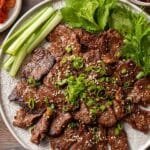
Korean Beef Bulgogi Recipe
- Prep Time: 2 hours 45 minutes
- Cook Time: 15 minutes
- Total Time: 3 hours
- Yield: 6 servings 1x
- Category: Main Course
- Method: Grilling
- Cuisine: Korean
Description
A super easy Korean Beef Bulgogi recipe featuring thin, tender rib eye steak slices marinated in a flavorful blend of pear, soy sauce, garlic, ginger, and gochujang. This Korean BBQ classic cooks quickly and delivers deliciously charred, juicy meat perfect for a savory meal.
Ingredients
Meat
- 1 ½ pounds boneless rib eye steak
Marinade
- ½ small pear, peeled and coarsely grated
- ¼ cup reduced sodium soy sauce
- 2 tablespoons brown sugar
- 2 tablespoons toasted sesame oil
- 3 cloves garlic, minced
- 1 tablespoon freshly grated ginger
- 1 tablespoon gochujang, Korean red pepper paste
For Cooking and Garnish
- 2 tablespoons vegetable oil, divided
- 2 green onions, thinly sliced
- 1 teaspoon toasted sesame seeds
Instructions
- Prepare Steak: Wrap the rib eye steak in plastic wrap and place it in the freezer for 30 minutes. Once slightly firm, unwrap and slice the steak across the grain into ¼-inch thick slices for optimal tenderness.
- Make Marinade and Marinate Steak: In a medium bowl, combine grated pear, reduced sodium soy sauce, brown sugar, toasted sesame oil, minced garlic, grated ginger, and gochujang to create the marinade. Place the steak slices and the marinade mixture into a gallon size Ziploc bag, seal, and marinate in the refrigerator for at least 2 hours or up to overnight, turning the bag occasionally to coat the meat evenly.
- Cook the Bulgogi: Heat 1 tablespoon of vegetable oil in a cast iron grill pan over medium-high heat. Working in batches to avoid overcrowding, add the marinated steak slices in a single layer. Cook each side for about 2-3 minutes until nicely charred and cooked through. Add the remaining 1 tablespoon vegetable oil and cook the rest of the steak using the same process.
- Serve: Immediately transfer the cooked bulgogi to a serving plate and garnish with thinly sliced green onions and toasted sesame seeds. Serve hot for the best flavor and texture.
Notes
- If a cast iron grill pan is unavailable, a large cast iron skillet can be used as an alternative for cooking the beef.
- Marinating for at least 2 hours is essential to develop deep flavors, but overnight marinating leads to even more tender and flavorful meat.
- Slicing the steak thinly against the grain helps achieve the tender texture characteristic of bulgogi.
- Adjust the amount of gochujang based on your preference for spiciness.
- Serve with steamed rice and your favorite Korean side dishes like kimchi for a complete meal.