

There’s something so comforting and vibrant about this Kimchi Fried Rice Recipe. It’s packed with punchy flavors, a little spice, and that irresistible tang from kimchi that keeps me coming back for seconds. Once you get the balance right, it’s pure magic in a bowl.

Why You’ll Love This Recipe
- Bold Flavors: The spicy, tangy kimchi combined with savory gochujang sauce makes this dish unforgettable.
- Quick and Easy: It comes together in under 30 minutes, perfect for busy weeknights.
- Versatile Ingredients: You can customize with sausages, mushrooms, or even frozen veggies depending on your pantry.
- Great Use of Leftovers: This recipe shines best with day-old rice, turning leftovers into a star meal.
Ingredients You’ll Need
Every ingredient in this Kimchi Fried Rice Recipe works harmoniously, from the tangy kimchi that gives it a bite to the earthy mushrooms that add depth. I always recommend grabbing some good-quality kimchi and using rice that’s had a day to firm up for the best texture.

- Oil: I use neutral oil like vegetable or canola so the flavors pop without interference.
- Garlic: Minced fresh garlic adds that essential aromatic foundation.
- Green onions: They bring a fresh bite and great color contrast.
- Cremini mushrooms: Finely diced, they give a meaty texture that balances the tang.
- Carrot: Finely diced carrots add subtle sweetness and crunch.
- Kimchi: The star ingredient — make sure it’s well fermented for max flavor.
- Vegan sausages (optional): A great protein boost and extra texture if you like.
- Cooked white rice: Day-old rice is key here, prevents mushiness.
- Kimchi brine: This liquid packs an umami punch and ties the sauce together.
- Gochujang: Korean chili paste adds heat and depth; adjust based on spice preference.
- Sugar: Balances tartness and spice perfectly.
- Toasted sesame oil: Drizzled in sauce, it gives a lovely nutty finish.
- Toasted sesame seeds: Adds crunch and beautiful garnish.
Variations
I’ve played around with this recipe quite a bit, and let me tell you, swapping ingredients to fit what you have on hand is totally doable. Feel free to get creative — that’s part of the fun!
- Protein Swap: I once used leftover shredded chicken instead of vegan sausages, and my family went crazy for it.
- Vegetable Mix: Frozen mixed veggies work in a pinch, just reduce cooking time to keep their texture.
- Mild Version: If you’re wary of spice, cut back on the gochujang or skip it altogether and amp up sesame oil flavor.
- Vegan & Gluten-Free: Just check labels on gochujang and sausage alternatives to keep it clean.
How to Make Kimchi Fried Rice Recipe

Step 1: Whip Up the Sauce
Start by mixing the kimchi brine, gochujang, sugar, toasted sesame oil, and sesame seeds in a small bowl. Setting this aside means your sauce will come together quickly when the time is right — trust me, it saves a headache midway!
Step 2: Sauté Your Aromatics
Heat the oil in your wok or non-stick pan over medium heat. Toss in the garlic and green onions and sauté gently for 2-3 minutes until fragrant but not browned. This step fills your kitchen with a warm, inviting aroma that’s half the satisfaction!
Step 3: Cook the Veggies to Perfection
Turn the heat up to high and add the diced carrots and mushrooms. Stir them around for about 2-3 minutes — you want the carrots to stay a little crunchy and the mushrooms just tender, so don’t overcook. This crunch is exactly what I love for texture contrast.
Step 4: Add Kimchi, Sausage, and Rice
Throw in the chopped kimchi and vegan sausages if you’re using them. Let everything cook together for 2 more minutes, then add your day-old rice. Stir thoroughly to combine the rice with the flavorful veggies — this step coats the grains with all that goodness.
Step 5: Pour in the Sauce and Stir-Fry
Pour your pre-mixed sauce over the rice and toss it up to evenly coat every grain. Stir-fry for another 3-5 minutes on high heat. I love to get little crispy bits by letting it sit a moment before stirring — that slightly charred, smoky flavor is pure comfort!
Step 6: Garnish and Serve
Finish with a generous sprinkle of sesame seeds and some extra chopped green onions. Serve it hot and watch how fast it disappears — my family quite literally fights over who gets the last spoonful.
Pro Tips for Making Kimchi Fried Rice Recipe
- Day-Old Rice Is a Must: Fresh rice holds too much moisture, making your dish soggy; always use chilled leftover rice for that perfect texture.
- High Heat Cooking: Crank your heat up! It’s the secret to getting crispy bits and depth of flavor in your fried rice.
- Don’t Overcrowd the Pan: If your pan is too full, the rice steams instead of fries, losing that coveted texture.
- Customize Spice Levels: Not everyone loves heat, so start low with gochujang and build up to your comfort zone.
How to Serve Kimchi Fried Rice Recipe
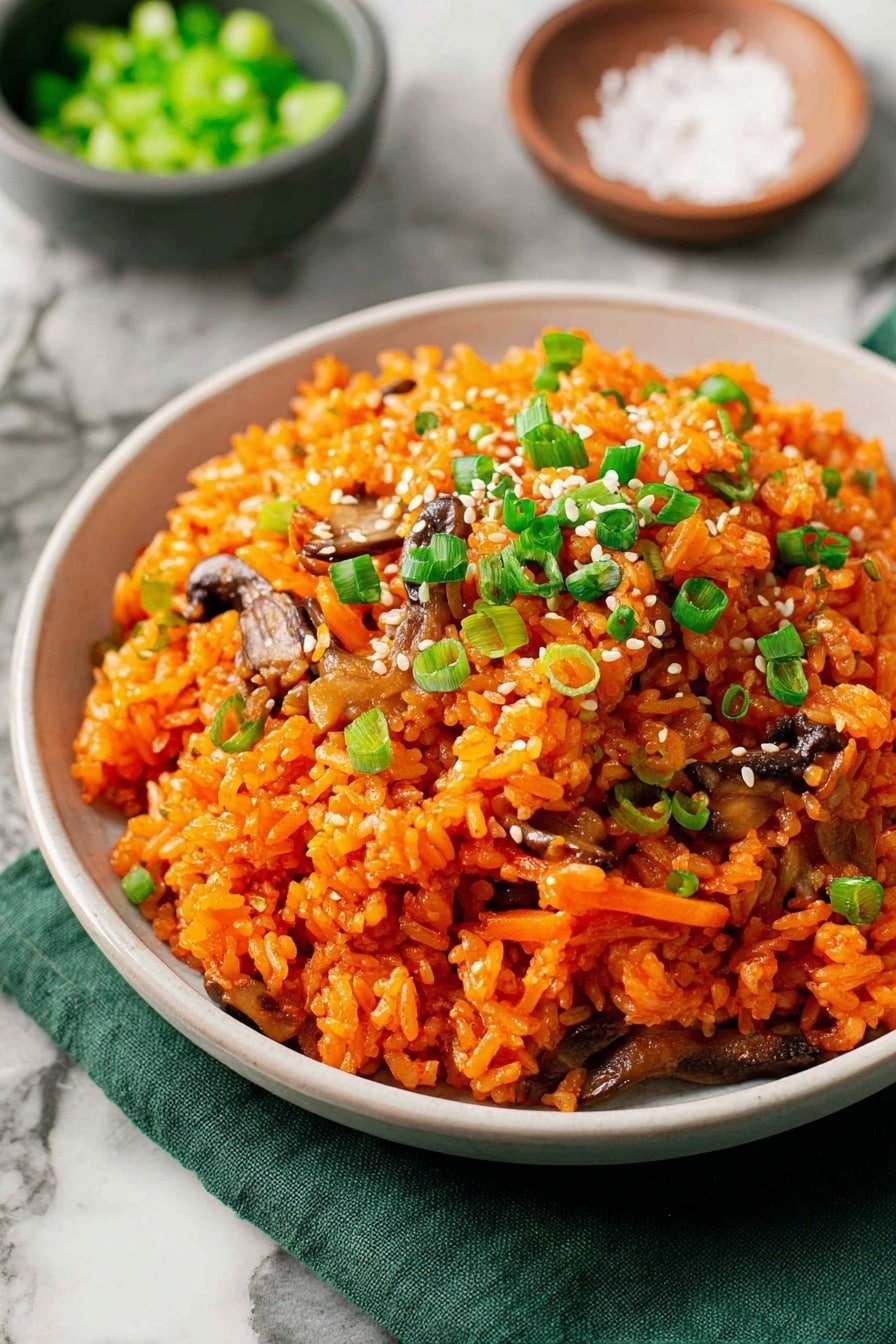
Garnishes
My go-to garnishes are extra sliced green onions for freshness and toasted sesame seeds for crunch. Sometimes, I’ll add a fried egg on top — the runny yolk adds an indulgent richness that’s hard to beat. A few extra kimchi pieces on the side never hurt, either!
Side Dishes
I love pairing this with simple cucumber salad or pickled radish to cut through the richness. For a heartier meal, Korean-style seaweed soup or some crispy tofu bites are fantastic accompaniments.
Creative Ways to Present
One time, I served this Kimchi Fried Rice Recipe stuffed inside hollowed-out bell peppers — it makes for a colorful, festive presentation that your guests will be impressed by. You can also serve it in lettuce cups for a fun interactive meal.
Make Ahead and Storage
Storing Leftovers
I keep leftovers in an airtight container in the fridge and they last about 3-4 days. Because the rice firms up a little more when chilled, you actually get a nicer texture when reheated if you fluff it well.
Freezing
Freezing works well for this dish, especially if you batch cook. Just portion it out, cool completely, then freeze. When you’re ready, thaw overnight in the fridge for best results.
Reheating
Reheat in a skillet over medium-high heat with a splash of water or oil to revive the rice’s moisture and to bring back some crispiness. Avoid microwaving straight from frozen to prevent soggy results.
FAQs
-
Can I use freshly cooked rice for Kimchi Fried Rice Recipe?
You can, but freshly cooked rice tends to be too moist and sticky for fried rice, which can make the dish soggy. Using day-old rice that’s been chilled overnight results in better texture and allows the grains to separate nicely.
-
How spicy is this Kimchi Fried Rice Recipe?
The level of spice depends mostly on how much gochujang you add and the brand of kimchi you use. You can easily adjust the heat by adding less gochujang or choosing milder kimchi varieties to suit your taste.
-
Can I make this recipe vegan or vegetarian?
Absolutely! This recipe is naturally vegan if you use vegan sausages or omit them altogether. Just make sure your kimchi and gochujang are free from any animal ingredients, as some brands can include fish sauce.
-
What can I serve with Kimchi Fried Rice?
Popular sides include simple cucumber salad, pickled vegetables, Korean seaweed soup, or even some grilled meats or tofu. These help balance the spicy, tangy flavors of the fried rice.
-
Is it okay to use frozen vegetables in this Kimchi Fried Rice Recipe?
Yes! Frozen diced vegetables can be a great time-saver. Just be mindful to cook them quickly at high heat to avoid sogginess, and drain any excess water before adding.
Final Thoughts
This Kimchi Fried Rice Recipe has become a staple in my kitchen because it’s easy, flavorful, and endlessly adaptable. I love how it transforms simple leftovers into something so satisfying and fresh-tasting. I hope you enjoy whipping it up just as much as I do — trust me, once you try it, it’ll be on repeat!
Print
Kimchi Fried Rice Recipe
- Prep Time: 10 minutes
- Cook Time: 15 minutes
- Total Time: 25 minutes
- Yield: 2 servings 1x
- Category: Main Course
- Method: Stovetop
- Cuisine: Korean
- Diet: Vegan
Description
Kimchi Fried Rice is a flavorful and spicy vegan dish made with cooked white rice, kimchi, a mix of vegetables, and a savory gochujang-based sauce. This quick and easy recipe delivers a perfect balance of tangy, spicy, and umami flavors, ideal for a satisfying lunch or dinner using leftover rice.
Ingredients
Main Ingredients
- 2 tbsp oil
- 2 cloves garlic minced
- 1/4 cup chopped green onions
- 3–4 cremini mushrooms finely diced
- 1 small carrot finely diced
- 1 cup kimchi chopped
- 1/2 cup chopped vegan sausages (optional)
- 2 cups cooked white rice
Sauce
- 3 tbsp kimchi brine
- 1 tbsp Gochujang
- 1 tsp sugar
- 1 tsp toasted sesame oil
- 1 tsp toasted sesame seeds
Instructions
- Prepare the sauce: In a small bowl, combine the kimchi brine, gochujang paste, sugar, toasted sesame oil, and sesame seeds. Set aside.
- Sauté the aromatics: Heat 2 tablespoons of oil in a wok or non-stick pan over medium heat. Once hot, add the minced garlic and chopped green onions, and sauté for 2-3 minutes, stirring regularly.
- Add the diced veggies: Increase heat to high and add diced carrots and cremini mushrooms. Stir-fry for 2-3 minutes until carrots are almost cooked but still retain slight crunch.
- Add the kimchi and vegan sausages: Add chopped kimchi and vegan sausages if using, cooking for 2 more minutes to combine flavors.
- Add the rice: Add cooked white rice to the pan and stir well to combine with the vegetables and kimchi.
- Pour in the sauce: Add the prepared gochujang sauce and toss the mixture evenly, coating the rice and vegetables.
- Stir-fry: Continue stir-frying the rice mixture for another 3-5 minutes or until the sauce is absorbed and the rice develops a slight char if desired.
- Serve: Garnish with extra chopped green onions and a sprinkle of toasted sesame seeds before serving.
Notes
- Use day-old leftover rice for better texture; freshly cooked rice is too moist for fried rice.
- Cook on high heat in a wok or non-stick pan to achieve a slightly charred, crispy flavor.
- Do not overcook the vegetables; 2-3 minutes is sufficient to keep them slightly crunchy.
- Frozen diced vegetables can be used as a convenient substitute if short on fresh produce.
- Adjust the spiciness by reducing or omitting gochujang; note that this will affect color and flavor balance.
- Optionally add a pinch of MSG or mushroom seasoning to enhance umami flavor for a takeout-style taste.


