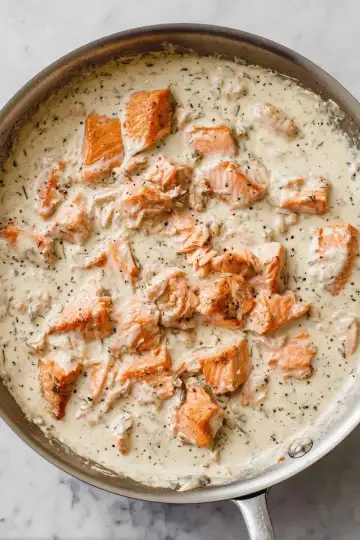
Creamy Salmon Pasta with Garlic Sauce Recipe
This creamy salmon pasta recipe combines tender, perfectly cooked salmon with a rich and flavorful garlic cream sauce. Featuring succulent salmon fillets seasoned with herbs and spices, served over al dente pappardelle pasta, and tossed in a luscious sauce made from butter, shallots, garlic, white wine, cream, cream cheese, and Parmesan. Enhanced with fresh herbs and lemon for a bright, balanced dish perfect for an impressive dinner.
CourseMain Course
CuisineFrench-inspired American
Keywordcreamy salmon pasta, salmon pasta recipe, garlic cream sauce pasta, pappardelle with salmon, easy salmon dinner, creamy pasta recipes, Stovetop
Prep Time15 minutes
Cook Time45 minutes
Total Time60 minutes
Servings6 servings
Ingredients
Salmon and Seasoning
- 1 1/2 lbs Salmon fillets
- 1 tbsp Lemon Juice
- 1 tsp Garlic Powder
- 1 tsp Onion Powder
- 1/2 tsp Smoked Paprika
- 1 1/2 tsp Herbs De Provence (or Italian Seasoning)
- Salt and Pepper to taste
- 2 tbsp Olive Oil
Creamy Garlic Sauce
- 2 tbsp Salted Butter
- 2 Shallots, diced
- 6 cloves Garlic, diced
- 2 tsp Herbs De Provence (or Italian Seasoning)
- 1 tsp Cajun Seasoning
- 4 sprigs Fresh Thyme, stems removed
- 1 cup Dry White Wine
- 2 tbsp All Purpose Flour
- 2 cups Heavy Cream
- 4 oz Cream Cheese, cut into small cubes
- 1 1/2 cups Parmesan Cheese, freshly grated
- 1 tbsp Dijon Mustard
- 2 tbsp Lemon Juice
- 3 tbsp Fresh Parsley, chopped
- 1 tsp Lemon Zest
Pasta
- 1 lb Pappardelle (or Linguine)
Instructions
- If using a whole salmon fillet, cut it into strips. If using pre-cut salmon fillets, proceed to the next step.
- Pat the salmon dry with a paper towel. Score the salmon by making slits on the surface to help the seasonings penetrate. Drizzle with 1 tbsp lemon juice, then season evenly with garlic powder, onion powder, smoked paprika, herbs de provence, salt, and pepper.
- Heat 2 tbsp olive oil in a large nonstick skillet over medium heat for 3-4 minutes until hot. Place the salmon skin side down and cook for about 5 minutes until opaque along the edges. Flip and cook for another 4-5 minutes until salmon is fully cooked, opaque, and easily releases from the pan; internal temperature should reach 145°F.
- Transfer the cooked salmon to a plate and set aside.
- Add 2 tbsp salted butter to the same skillet. Once melted, add diced shallots and cook for 5 minutes until softened. Stir in diced garlic, 2 tsp herbs de provence, 1 tsp cajun seasoning, and 4 sprigs fresh thyme and cook for 3 more minutes, stirring constantly.
- Pour in 1 cup dry white wine and cook for 5 minutes while scraping the brown bits off the bottom of the pan with a wooden spoon to enhance flavor. Add 2 tbsp all purpose flour and whisk continuously to form a thick paste, cooking for about 3 minutes.
- Reduce heat to low and slowly add 2 cups heavy cream and 4 oz cream cheese cubes. Cook for 7-10 minutes, stirring frequently, until the cream cheese melts completely and the sauce thickens.
- Stir in 1 1/2 cups grated Parmesan cheese, 1 tbsp Dijon mustard, 2 tbsp lemon juice, 3 tbsp chopped fresh parsley, and 1 tsp lemon zest until fully incorporated. Remove the sauce from heat.
- Prepare 1 lb pappardelle according to package directions until al dente. Reserve a cup of pasta water before draining.
- Add the drained pasta to the skillet with the garlic cream sauce. Toss well to coat all noodles thoroughly. Add reserved pasta water a little at a time if the sauce needs thinning.
- Gently fold the cooked salmon pieces into the pasta. Garnish with additional fresh parsley and grated Parmesan cheese before serving.
Notes
- For a lighter option, substitute heavy cream with half-and-half but the sauce may be less thick and creamy.
- Fresh herbs such as thyme and parsley add brightness—feel free to adjust amounts or substitute with Italian seasoning if fresh herbs aren’t available.
- Use good quality dry white wine for better flavor; if you prefer no alcohol, substitute with chicken or vegetable broth.
- To check salmon doneness, use a food thermometer or ensure it flakes easily with a fork.
- Reserving pasta water helps adjust the sauce consistency to your liking; add gradually to avoid thinning too much.
- For gluten-free versions, use gluten-free pasta and gluten-free flour or cornstarch as a thickener in the sauce.